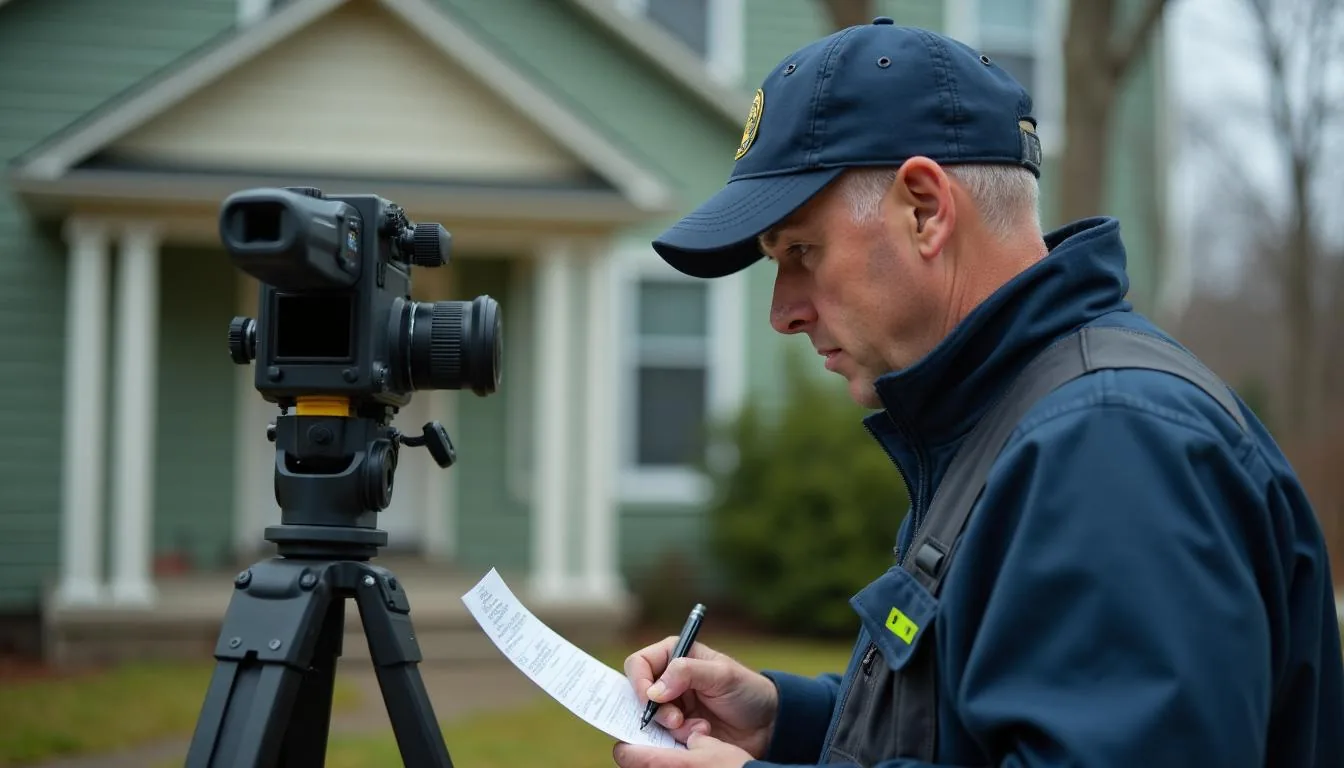
Code enforcement case software that keeps the notice, the photo and the deadline together
Code enforcement case management is the handling of a property code violation from complaint through inspection, notice, compliance deadline, hearing and, where needed, abatement or lien. The case attaches to a parcel rather than a person. The 2022 Census of Governments counted 90,837 local governments in the United States, most of which enforce some property maintenance code. Neurobird keeps intake, field photos, notices and statutory deadlines in one case file per parcel.
Neurobird Code Enforcement Case in short
- Take complaints from every intake channel into one queue with the parcel attached
- Record inspections and photos in the field, against the case, with the date they were taken
- Generate notices from the violation code and track the statutory deadline that follows
- 90,837 Local governments counted in the 2022 Census of Governments, the population of jurisdictions that may run property maintenance and nuisance enforcement. US Census Bureau, 2022 Census of Governments
- Every 5 years The Census of Governments is conducted on a fixed cycle, providing the authoritative count of jurisdictions, employment and finances for local government. US Census Bureau, Census of Governments
- Pricing runs 250 to 900 US dollars per month across 3 tiers. Early access is free.
What municipal code enforcement departments actually deal with
Why it stays broken
Enforcement is a records job dressed as a field job. Intake is scattered across 4 channels, evidence is on a phone, the notice is a Word template, and the deadline is in a diary. When a case goes to hearing, all of that has to be reassembled in a few days by somebody who has 200 other cases.
A case with 30 photos and no reliable service record is a case you will lose.
Initial contact with a suspected violator generally occurs within 30 days of receiving a complaint, although environmental hazards and other high priority cases are investigated as quickly as possible, usually within 24 hours.
Neurobird Code Enforcement Case Compliance Platform
Make the parcel the file. Every complaint, inspection, photo, notice and deadline attaches to it, so the hearing packet is a print rather than an excavation.
- 1Take complaints from every intake channel into one queue with the parcel attached
- 2Record inspections and photos in the field, against the case, with the date they were taken
- 3Generate notices from the violation code and track the statutory deadline that follows
- 4Produce the case file a hearing officer, a court or a lien filing actually requires
What changes with Neurobird Code Enforcement Case?
The same work, read left to right: how it runs today, and how it runs once the record is in one place.
| Today | With Neurobird Code Enforcement Case |
|---|---|
| Complaints arrive by phone, email, a web form and a council member, and none of those land in the same list | Take complaints from every intake channel into one queue with the parcel attached |
| Photos live on the officer's phone, notices live in a Word template, and the case history lives in a paper folder | Record inspections and photos in the field, against the case, with the date they were taken |
| When a case reaches a hearing or a lien, somebody has to reassemble the whole timeline from three places under a deadline | Generate notices from the violation code and track the statutory deadline that follows |
Who is this for?
Same case file, three different scales.
One officer, everything
You are intake, inspection, notice and hearing prep. You need the case file to assemble itself because there is nobody to delegate to.
Several officers, shared territory
Consistency matters more than speed. You need the same notice language, the same deadlines and one queue nobody works twice.
Wide area, mixed codes
Different codes across districts and long drives between them. You need field capture that works offline and citation references that match the right code.
What actually sits behind an enforcement case
Useful if you are standing up a programme or defending a case at hearing. Each source links out.
Local governments counted in the 2022 Census of Governments, the population of jurisdictions that may run property maintenance and nuisance enforcement.
US Census Bureau, 2022 Census of GovernmentsThe Census of Governments is conducted on a fixed cycle, providing the authoritative count of jurisdictions, employment and finances for local government.
US Census Bureau, Census of GovernmentsMost local property maintenance and building codes are adopted from the International Code Council model code family, then amended locally, which is why citations must be jurisdiction exact.
International Code CouncilBuilding permit data is published monthly by jurisdiction, a useful cross reference when a violation involves unpermitted work.
US Census Bureau, Building Permits SurveyHow does Neurobird Code Enforcement Case work?
One intake queue
Phone, web form, email and walk in complaints land in the same queue with the parcel resolved, so nothing is worked twice and nothing is lost.
Evidence with a timestamp
Officers photograph the violation in the field against the case. The date and location come with the photo rather than being asserted later.
Notices and clocks
Notices are generated from the violation code with the correct compliance period, and the reinspection date is tracked from the day service is recorded.
The case file, as your officer would work it
A working preview. Tick an item to advance the case.
| Requirement | Status | Next due | |
|---|---|---|---|
| Reinspection due in 14 days | current | in 42d | |
| Abatement ordered, contractor scheduled | due soon | in 9d | |
| Lien filed against parcel | current | in 120d | |
| Case 2026-0412, tall grass and weeds | overdue | 3d late | |
| Notice of violation mailed, certified | current | in 64d |
Tick a requirement to file evidence against it.
Code enforcement case software questions, answered
Key terms
- What is code enforcement case management?
- Code enforcement case management is the handling of a property code violation from complaint through inspection, notice, compliance deadline, hearing and, if needed, abatement or lien. The case attaches to a parcel rather than a person, and it can outlive several owners.
How many jurisdictions do this work?
The 2022 Census of Governments counted 90,837 local governments in the United States. A large share of the general purpose ones run some form of property maintenance or nuisance code enforcement, usually with a very small team.
Why does the paper trail matter so much?
Because enforcement is due process. A notice that cannot be proved as served, a photo without a date, or a deadline that was not tracked will end a case at the hearing regardless of how obvious the violation was.
Where do the codes themselves come from?
Most jurisdictions adopt model codes, commonly the International Code Council family, then amend locally. That is why 2 neighbouring cities can enforce the same nuisance differently and why the citation reference has to be exact.
Does this replace our permitting system?
No. Permits and inspections for construction stay where they are. This is the enforcement side: complaints, violations, notices, deadlines and abatement.
Why we are building this
Code enforcement fails on process, almost never on judgement. The officer usually knows exactly what is wrong with the property. What loses the case is a service record nobody can produce or a photo nobody can date.
The tools most departments have are a spreadsheet, a Word template and a camera roll. That is not a reflection of the work, it is a reflection of what municipal budgets buy.
We would rather build this with officers and supervisors than guess. Tell us how your cases run, and where we have got it wrong.
Where the requirement comes from
Public sources on jurisdictions, codes and the data behind them.
- 2022 Census of Governments, organization tables The authoritative count of local governments by type, the population of jurisdictions running enforcement.
- US Census Bureau, Census of Governments Programme page covering organization, employment and finance data for state and local government.
- International Code Council, I-Codes The model code family most local property maintenance and building codes are adopted from.
- US Census Bureau, Building Permits Survey Monthly permit data by jurisdiction, useful when a case involves unpermitted work.
How much does Neurobird Code Enforcement Case cost?
Priced per jurisdiction because the case load belongs to the jurisdiction. Unlimited officers and cases on every tier.
- Unified complaint intake
- Case file per parcel
- Field photo capture
- Notice generation
- Email support
- Everything in Small jurisdiction
- Deadline and reinspection tracking
- Hearing packet export
- Abatement and cost tracking
- Named contact
- Everything in City
- Multi department routing
- Lien and cost recovery records
- GIS and permitting sync
- Onboarding included
Get free early access
If you run enforcement, tell us how complaints arrive today and what happens to field photos.
Straight answer on where this is: In development. Early access gets the working preview, influence on what ships first, and early access pricing. It does not get you a login today.
Prefer email? Write to office@neurobird.com and a person will reply. No autoresponder.