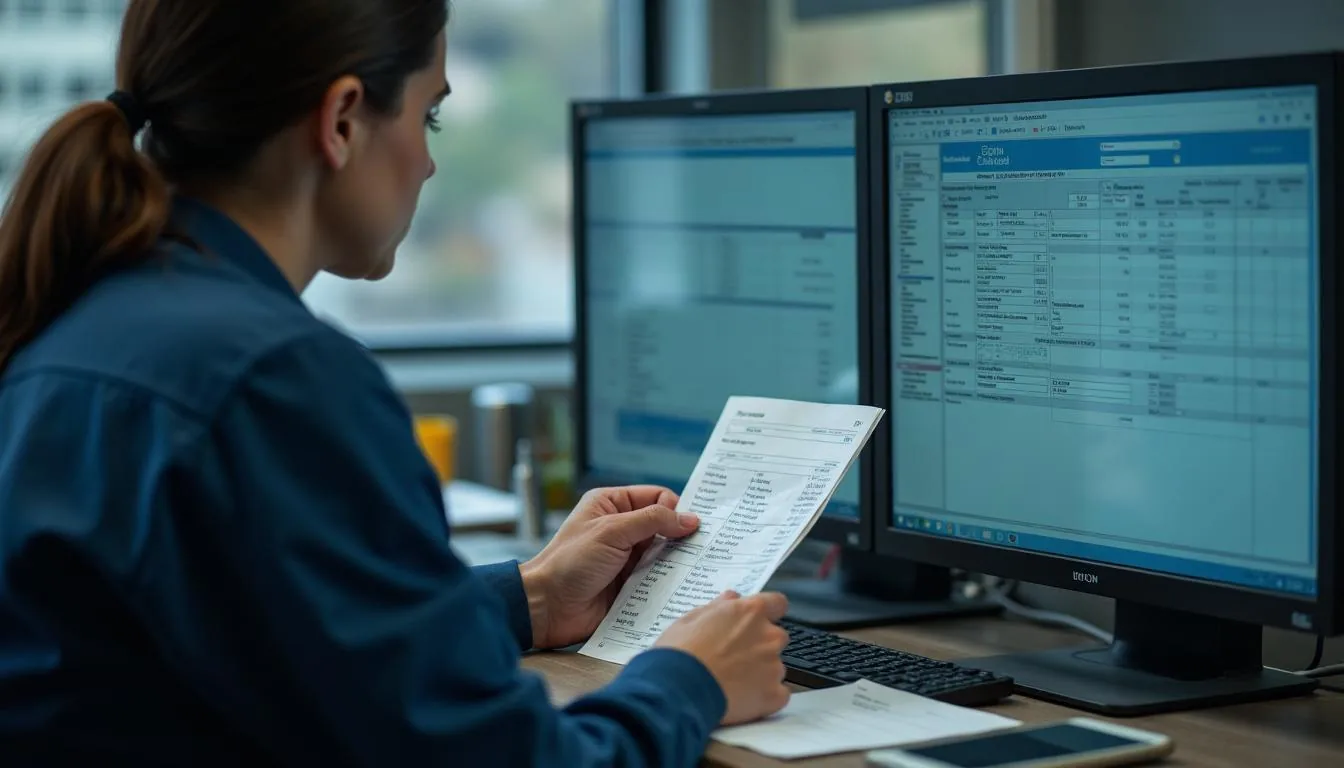
Freight audit and payment software that catches the accessorial before the money leaves, not after the clock runs out
Freight audit and payment is the review a shipper runs over every carrier invoice before paying it: rate applied, accessorials charged, duplicate bills caught, and the freight bill matched back to what was actually tendered. The clocks are statutory. Under 49 U.S.C. 13710 a carrier has 180 days from the original bill to add charges and a shipper has 180 days to contest one, and 49 U.S.C. 14705 allows 18 months to begin a civil action either way. Neurobird holds the shipment, the invoice and the dispute on one record.
Neurobird Freight Audit and Payment in short
- Match every invoice to the shipment it belongs to before payment, not after
- Flag duplicate payments and overcollections against the freight bill that supports them
- File the overcharge claim with the documentation 49 CFR 378.4 asks for
- 180 days Window a motor carrier has to issue a bill for charges beyond those originally billed, and the same window a shipper has to contest a bill, each measured from receipt of the original bill. 49 U.S. Code 13710
- 18 months Limitation on a carrier beginning a civil action to recover charges, and on any person beginning an action to recover overcharges. Electing to file a complaint with the Surface Transportation Board instead extends that to 3 years. 49 U.S. Code 14705
- Pricing runs 199 to 1480 US dollars per month across 3 tiers. Early access is free.
What shippers, brokers and third party logistics providers actually deal with
Why it stays broken
Freight charges are settled by two departments that do not share a system. Transportation knows what was tendered and accounts payable knows what was invoiced, and the only place those two facts meet is a document someone opens once. The deadlines that decide whether an overcharge is still recoverable are written in statute rather than in the finance system, so they run in the background whether or not anyone is counting.
Under 49 U.S.C. 13710 a carrier must issue any bill for charges beyond those originally billed within 180 days of the original bill, and a shipper must contest a bill within 180 days of receiving it.
A carrier must issue any bill for charges in addition to those originally billed within 180 days of the receipt of the original bill in order to have the right to collect such charges.
Neurobird Freight Audit and Payment Operations Platform
One record per shipment: what was tendered, what the carrier invoiced, which rate and accessorials were applied, whether that bill has been seen before, and where the claim stands against the clock the statute is actually running.
- 1Match every invoice to the shipment it belongs to before payment, not after
- 2Flag duplicate payments and overcollections against the freight bill that supports them
- 3File the overcharge claim with the documentation 49 CFR 378.4 asks for
- 4Run the 180 day billing window and the 18 month limitation on the same board
What changes with Neurobird Freight Audit and Payment?
The same work, read left to right: how it runs today, and how it runs once the record is in one place.
| Today | With Neurobird Freight Audit and Payment |
|---|---|
| The invoice is paid on day two and the accessorial that should not have been on it is found on day two hundred | Match every invoice to the shipment it belongs to before payment, not after |
| The same bill of lading arrives twice from two systems and both get paid, because neither desk sees the other | Flag duplicate payments and overcollections against the freight bill that supports them |
| A claim is filed, the carrier goes quiet, and nobody is watching the statutory window that quietly closes on it | File the overcharge claim with the documentation 49 CFR 378.4 asks for |
Who is this for?
The same invoice, three different desks.
You pay the carriers directly
Hundreds of invoices a week across several modes. You need the rate check, the accessorial check and the duplicate check to happen before the payment file is built.
You pay and rebill
You settle the carrier and invoice the customer. You need both sides of the same shipment on one record so a margin leak has a name and a date attached to it.
You move freight for an agency
31 U.S.C. 3726 requires a prepayment audit before the bill is paid and gives the government three years to deduct an overpayment. You need the audit evidence kept, not recreated later.
The audit board, as your settlement desk would work it
Clear an exception and watch the payable, the claim and the deadline move together.
| Line item | Amount | |
|---|---|---|
| CLM-2291, overcharge filed 44 days ago, carrier silent | $1,840 | |
| INV-88240, detention charged with no signed record behind it | $620 | |
| INV-88214, rate variance of $412 over the agreed tariff | $3,275 | |
| INV-88231, duplicate of INV-88109, held before payment | $455 |
Click recover to add a missed line to the invoice.
How does Neurobird Freight Audit and Payment work?
Take the invoice
Carrier bill, bill of lading, rate and accessorials land against the shipment record rather than into an inbox, so the comparison happens before the payment run is built.
Audit against the tender
Rate, weight, classification and every accessorial are checked against what was agreed, and anything unexplained becomes a line with a reason attached rather than a rounding difference.
Run the claim to the end
A claim carries the documentation the rule requires, the 60 day disposition window the carrier is working to, and the statutory limitation date that ends the argument for good.
What the statutes say about freight billing
Two federal statutes that set the clocks, the claims part that says how an overcharge is documented and answered, and the credit rule that decides when the money is actually due.
Window a motor carrier has to issue a bill for charges beyond those originally billed, and the same window a shipper has to contest a bill, each measured from receipt of the original bill.
49 U.S. Code 13710Limitation on a carrier beginning a civil action to recover charges, and on any person beginning an action to recover overcharges. Electing to file a complaint with the Surface Transportation Board instead extends that to 3 years.
49 U.S. Code 14705Time the processing carrier has to pay, decline to pay or settle a written overcharge, duplicate payment or overcollection claim, unless both sides agree in writing to a specific extension.
49 CFR 378.8Time a carrier has to pay, decline or make a firm compromise settlement offer on a loss or damage claim, with a written status update at that point and every 60 days after it while the claim stays open.
49 CFR 370.9Standard credit period a carrier extends to a shipper, beginning the day after the freight bill is presented and including weekends and legal holidays. A tariff rule may substitute a different period, but never longer than 30 calendar days.
49 CFR 377.203Time the government has to deduct an overpayment from an amount later due a carrier, on top of the prepayment audit already required before payment. Payment to an audit contractor may not exceed 50 percent of the overpayment identified.
31 U.S. Code 3726Freight audit and payment software questions, answered
Key terms
- What is freight audit and payment?
- It is the review a shipper runs over carrier invoices before paying them, and the settlement that follows. It covers rate and accessorial checking, duplicate detection, claim filing under 49 CFR part 378, and the statutory clocks in 49 U.S.C. 13710 and 14705.
- What are the deadlines on a freight overcharge?
- 49 U.S.C. 13710 gives a shipper 180 days from receiving a bill to contest it. 49 U.S.C. 14705 gives 18 months to begin a civil action to recover an overcharge, extended to 3 years if a complaint is filed with the Surface Transportation Board instead.
Does this pay the carriers for us?
No. Payment runs through your existing accounts payable. This is the audit and the claim record around it, so what leaves has been checked first and what is disputed is tracked to a date rather than to a hope.
How does it handle a duplicate payment?
A duplicate is a claim class of its own under 49 CFR part 378, alongside overcharges and overcollections. The record keeps the freight bills and the payment information that 49 CFR 378.4 says the claim must be accompanied by.
Is a prepayment audit different for federal freight?
Yes. 31 U.S.C. 3726 requires each agency to verify a transportation bill using a prepayment audit before paying it, and lets the government deduct an overpayment from later amounts due for 3 years after the bill was paid.
Why we are building this
We went looking for money that leaks a few dollars at a time and is only visible in aggregate, and freight invoices kept coming up. The rate is right, the accessorial is wrong, the bill arrives twice, and the window to say so closes on a statutory calendar that nobody in the building is watching. That is a record problem, and record problems are what we build. The statutes we read while scoping this are linked above, so you can check our reading of them instead of taking our word for it. If we have a clock wrong, tell us and we will fix it.
Where the requirement comes from
Primary sources, straight from the regulators.
- 49 U.S. Code 13710, billing disputes The 180 day windows on both sides, and the shipper's right to the rate and rules a charge was based on.
- 49 U.S. Code 14705, limitation on actions Eighteen months to sue either way, three years through the Board, and when the claim actually accrues.
- 49 CFR 378.4, documentation of claims What an overcharge, duplicate payment or overcollection claim must be accompanied by, and what cannot be used to deny it.
- 49 CFR 378.8, disposition of claims Sixty days to pay, decline or settle, and the written reasons a carrier owes you when it declines.
- 49 CFR 377.203, extension of credit to shippers When the credit period starts, how long it may run, and the service charges a tariff can attach to it.
- 31 U.S. Code 3726, payment for transportation The prepayment audit duty on every agency, the three year deduction right, and how audit contractors are paid.
How much does Neurobird Freight Audit and Payment cost?
Priced per operation because an audit finds the same money whether the invoice count is high or low. Invoices, claims and rate tables are unlimited on the upper tiers.
- Up to 2,000 invoices a month
- Rate and accessorial audit
- Duplicate detection
- Claim tracking
- Unlimited invoices
- Contract rate tables
- Claim filing packets
- Statutory deadline alerts
- Pay and rebill views
- Customer level margin
- Carrier scorecards
- Priority support
Get free early access
Early access means we load your carriers, your rate tables and your open claims before you type anything, and the account stays free while we do it.
Straight answer on where this is: The software is in development. Nothing is purchasable today. Early access means you shape it and pay nothing while we build.
Prefer email? Write to office@neurobird.com and a person will reply. No autoresponder.