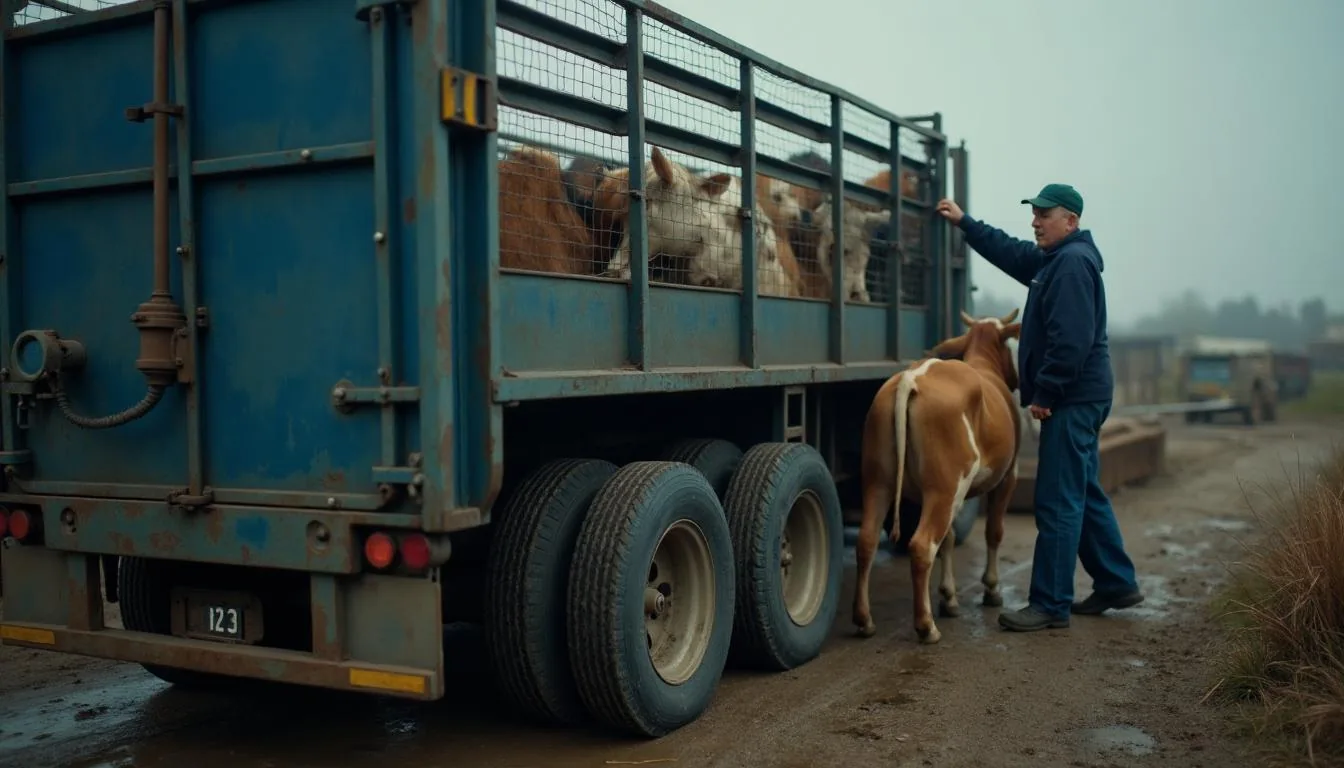
Livestock hauling software that runs the confinement clock next to the driving clock
Livestock hauling is the commercial transport of live animals between farms, sale barns, feedyards and packing plants. It is regulated differently from freight because the cargo is alive: 49 USC 80502 limits confinement to 28 consecutive hours without a rest of at least 5 hours, interstate movement needs health papers under 9 CFR part 86, and hours of service relief is limited by 49 CFR 395.1. Neurobird holds the papers, the counts and both clocks on one load record.
Neurobird Livestock Hauling in short
- Verify health certificates and official identification before the truck leaves, not at the line
- Track the 28 hour confinement clock alongside the driver hours of service clock
- Record head count, weights and condition at load and at unload with timestamps
- 28 hours Federal law prohibits confining animals in a vehicle for more than 28 consecutive hours without unloading for feed, water and at least 5 consecutive hours of rest, extendable to 36 hours on written request. Cornell LII, 49 USC 80502
- 80502 The statute sits in title 49 of the US Code and is enforced independently of the trucking hours of service rules, so the two limits have to be planned together. GovInfo, 49 USC 80502
- Pricing runs 45 to 190 US dollars per month across 3 tiers. Early access is free.
What livestock haulers and cattle transport fleets actually deal with
Why it stays broken
Livestock moves on relationships and phone calls, and the paperwork chases the truck. Freight software assumes a pallet count and a delivery signature, and none of it has a field for head count, shrink or the 36 hour extension.
A load turned back at a state line for missing papers can idle a truck for 300 miles and put the 28 hour clock in the wrong place.
Livestock : Vehicles hauling livestock from a farm may exceed State weight limits by up to 5 percent.
Neurobird Livestock Hauling Audit Platform
Make the load the record. Papers, identification, counts, weights, rest stops and wash outs attach to it, and both clocks are visible on the same screen.
- 1Verify health certificates and official identification before the truck leaves, not at the line
- 2Track the 28 hour confinement clock alongside the driver hours of service clock
- 3Record head count, weights and condition at load and at unload with timestamps
- 4Log wash outs and rest stops so a disease traceback has somewhere to start
What changes with Neurobird Livestock Hauling?
The same work, read left to right: how it runs today, and how it runs once the record is in one place.
| Today | With Neurobird Livestock Hauling |
|---|---|
| The health papers, the brand inspection and the bill of lading arrive from 3 different people, and the driver finds out at the state line which one is missing | Verify health certificates and official identification before the truck leaves, not at the line |
| The 28 hour clock and the driver hours of service clock run at the same time and nobody is tracking both | Track the 28 hour confinement clock alongside the driver hours of service clock |
| Head count in and head count out differ by 1, and the argument about shrink and death loss happens 400 miles from anyone who saw the load | Record head count, weights and condition at load and at unload with timestamps |
Who is this for?
Same live load, three different operations.
You run one truck
You are the driver, the dispatcher and the paperwork. You need the papers and both clocks on a phone, not in a binder.
You run sale barn routes
Multiple trucks, repeat lanes, tight schedules. You need state entry requirements checked before dispatch rather than at the line.
You cross several states
The 28 hour clock is a real constraint on your lanes. You need rest stops planned into the trip and documented afterwards.
How does Neurobird Livestock Hauling work?
Verify before departure
Health certificate, official identification and destination state requirements checked at booking rather than at the line.
Run both clocks
The 28 hour confinement limit and the 11 hour driving limit shown together, so a rest stop is planned rather than discovered.
Record what got there
Head count and weights at load and unload with timestamps, so shrink and death loss are documented instead of argued.
The load, as your dispatcher would run it
A working preview. Tick an item to clear the load for departure.
Tap an asset to log a scan and timestamp the inspection.
What actually governs a live load
Useful if you are booking interstate loads or training drivers. Each source links out.
Federal law prohibits confining animals in a vehicle for more than 28 consecutive hours without unloading for feed, water and at least 5 consecutive hours of rest, extendable to 36 hours on written request.
Cornell LII, 49 USC 80502The statute sits in title 49 of the US Code and is enforced independently of the trucking hours of service rules, so the two limits have to be planned together.
GovInfo, 49 USC 80502The agricultural commodity provision limits hours of service relief to movement within a stated radius of the source, so most long livestock runs fall back under the ordinary limits.
eCFR, 49 CFR 395.1Outside the agricultural radius a driver has an 11 hour driving limit inside a 14 hour window after 10 consecutive hours off duty, which is the clock that collides with the confinement clock.
eCFR, 49 CFR 395.3The animal disease traceability rule sets official identification and interstate certificate requirements, and it is what makes a traceback possible after the fact.
eCFR, 9 CFR part 86Livestock hauling software questions, answered
Key terms
- What is livestock hauling?
- Livestock hauling is the commercial transport of live animals, usually cattle, hogs or sheep, between farms, sale barns, feedyards and packing plants. It is regulated differently from freight because the cargo is alive: there is a federal confinement limit, animal health paperwork for interstate movement, and specific hours of service treatment for agricultural loads.
- What is the 28 hour law?
- Federal law at 49 USC 80502 prohibits confining animals in a vehicle for more than 28 consecutive hours without unloading for feed, water and rest of at least 5 consecutive hours. The period can be extended to 36 hours on the written request of the person having custody of the animals. It predates the modern trucking rules and still applies.
Do livestock haulers get an hours of service exemption?
Agricultural commodity transport, including livestock, has a limited exemption within a radius of the source of the commodity under 49 CFR 395.1. Outside that radius the normal limits apply, including the 11 hour driving limit and the 14 hour window. Running both clocks at once is the practical difficulty.
What paperwork is needed to cross a state line?
Generally an interstate certificate of veterinary inspection and official animal identification under the federal animal disease traceability rule at 9 CFR part 86, plus whatever the destination state requires such as brand inspection or entry permit numbers. Requirements differ by species and by state.
Does this replace our ELD?
No. The electronic logging device keeps doing hours of service. This tracks the load: papers, counts, weights, rest stops and wash outs, and shows the confinement clock next to the driving clock so the two are planned together.
Why we are building this
Livestock hauling carries 2 legal clocks at once and most software knows about neither. The 28 hour confinement limit sits in a statute written long before electronic logs, and it still governs the load.
The papers are the other half. A missing certificate of veterinary inspection turns a truck around, and the cost lands on the hauler rather than on whoever forgot to send it.
We would rather build this with people who have hauled cattle. Tell us how your loads actually run, and where we have got it wrong.
Where the requirement comes from
The statute, the hours rules and the animal health requirements.
- Cornell LII, 49 USC 80502 transportation of animals The 28 hour law itself, including the rest requirement and the 36 hour written extension.
- eCFR, 49 CFR 395.1 scope of the hours rules Where the agricultural commodity exception applies and where it stops.
- eCFR, 9 CFR part 86 animal disease traceability Official identification and interstate certificate requirements for moving livestock across state lines.
- USDA APHIS, animal disease traceability The federal programme overview, including species requirements and accepted forms of official identification.
How much does Neurobird Livestock Hauling cost?
Priced per truck because that is the unit that runs the clock. Unlimited loads and users on every tier.
- Load records
- Health paper storage
- Confinement clock
- Head count log
- Email support
- Everything in Owner operator
- Dual clock planning
- State entry requirements
- Wash out log
- Named contact
- Everything in Fleet
- Shrink and death loss reporting
- Customer delivery packets
- Traceback ready records
- Onboarding included
Get free early access
If you haul livestock, tell us how the papers reach the driver today and what has turned a load back.
Straight answer on where this is: In development. Early access gets the working preview, influence on what ships first, and early access pricing. It does not get you a login today.
Prefer email? Write to office@neurobird.com and a person will reply. No autoresponder.