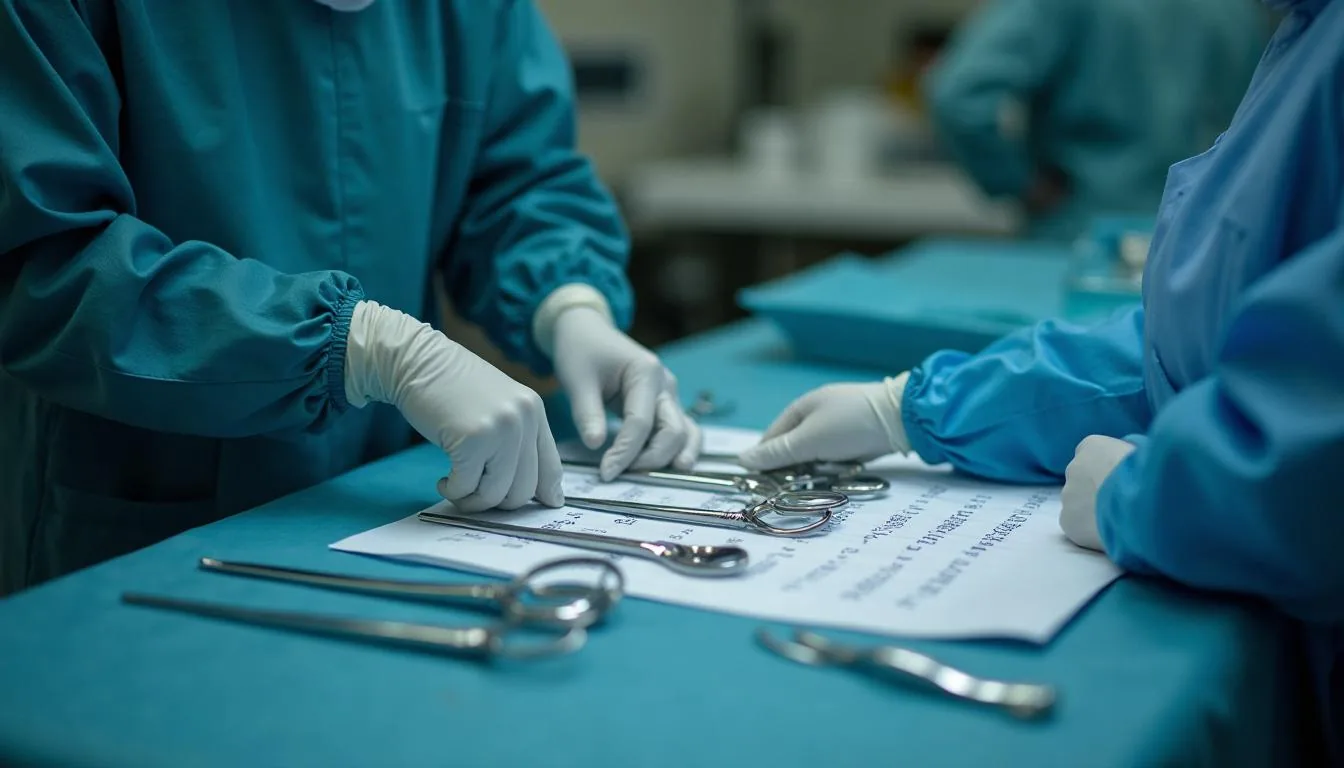
Surgical instrument tray tracking that knows where every set is, not where it should be
Surgical instrument tray tracking is the practice of following each instrument set through decontamination, assembly, sterilization, storage and the operating room, so its location, contents and cycle history are known at any moment. AHRQ counted roughly 11.5 million operating room procedures during US hospital inpatient stays in 2014, and a single major set can hold more than 100 instruments. Neurobird keeps the count sheet, the location and the load record attached to the same tray.
Neurobird Surgical Instrument Tray Tracking in short
- Track each set through decontam, assembly, sterilization and the case cart without a clipboard
- Keep one current count sheet per tray, versioned, so nobody assembles from a superseded list
- Tie every sterilization cycle to the trays inside it and the load record that proves the parameters
- 11.5M Approximate operating room procedures performed during US hospital inpatient stays in 2014, each one drawing on sets that had to be complete and documented. AHRQ Healthcare Cost and Utilization Project
- 21 CFR 830 The federal unique device identification rule, which is why lot and serial data for implants and single use items belongs in the tray record. eCFR, Title 21 Part 830
- Pricing runs 180 to 640 US dollars per month across 3 tiers. Early access is free.
What sterile processing and operating room teams actually deal with
Why it stays broken
The count sheet lives in a binder, the location lives in somebody's memory, and the load record lives on a printout in a drawer. Nothing joins them, so a missing set becomes a hunt across 4 rooms while a 7am case waits.
One incomplete set at 7am delays a case, and a 30 minute room delay pushes the whole day back.
Surgical instruments must be available in a quantity that is commensurate with the ASC’s expected daily procedure volume, taking into consideration the time required for appropriate cleaning and, if applicable, sterilization.
Neurobird Surgical Instrument Tray Tracking Audit Platform
Give every tray an identity, then record what happens to it at each of the 4 stages. Location and completeness stop being oral history.
- 1Track each set through decontam, assembly, sterilization and the case cart without a clipboard
- 2Keep one current count sheet per tray, versioned, so nobody assembles from a superseded list
- 3Tie every sterilization cycle to the trays inside it and the load record that proves the parameters
- 4Log loaner sets in and out with the vendor, the case and the turnaround attached
What changes with Neurobird Surgical Instrument Tray Tracking?
The same work, read left to right: how it runs today, and how it runs once the record is in one place.
| Today | With Neurobird Surgical Instrument Tray Tracking |
|---|---|
| A set goes missing between decontam and the case cart, and nobody can say which of the 4 rooms it is sitting in | Track each set through decontam, assembly, sterilization and the case cart without a clipboard |
| Count sheets live in a binder, get amended by hand, and the tech assembling at 5am is working from last year's version | Keep one current count sheet per tray, versioned, so nobody assembles from a superseded list |
| The loaner arrives late, gets run through a short cycle, and the documentation for that load is a sticky note | Tie every sterilization cycle to the trays inside it and the load record that proves the parameters |
Who is this for?
Same trays, three different pressures.
You run a handful of rooms
Every set turns several times a day. You need location and completeness at a glance, not a monthly report.
You feed a large OR block
Trays, loaners and vendor reps all arrive at once. You need the loaner log and the count sheet to be the same system.
You process for several sites
Sets move between facilities and nobody owns them. You need one tray identity that survives the drive across town.
How does Neurobird Surgical Instrument Tray Tracking work?
Give the tray an identity
Each set gets an ID, a current count sheet and a photo. A scan at any station updates location without a clipboard.
Record the cycle, not just the load
Every sterilization cycle records the trays inside it, the parameters and the operator, so the load record comes back in seconds rather than a drawer search.
Close the loop on loaners
Vendor sets are logged in on arrival, tied to the case, and logged out with a turnaround time attached, so the late delivery is documented rather than argued about.
What actually governs instrument reprocessing
Useful if you are writing policy or preparing for survey. Each source links out.
Approximate operating room procedures performed during US hospital inpatient stays in 2014, each one drawing on sets that had to be complete and documented.
AHRQ Healthcare Cost and Utilization ProjectThe federal unique device identification rule, which is why lot and serial data for implants and single use items belongs in the tray record.
eCFR, Title 21 Part 830The Medicare condition of participation covering infection prevention and control, the reason reprocessing records get read during survey.
CMS, quality and safety oversightA unique device identifier carries a device identifier plus production information such as lot or serial, both of which are checkable in the public database.
AccessGUDID, National Library of MedicineFDA expects the manufacturer's validated reprocessing instructions to be followed for each device, which means the count sheet and the method have to travel together.
FDA, reprocessing reusable medical devicesThe tray, as it moves through the department
A working preview. Tick a set to move it to the next stage.
Tap an asset to log a scan and timestamp the inspection.
Surgical instrument tray tracking software questions, answered
Key terms
- What is surgical instrument tray tracking?
- Surgical instrument tray tracking is the practice of following each instrument set through decontamination, assembly, sterilization, storage and the operating room so its location, contents and cycle history are known at any moment. A single major set can hold more than 100 instruments, and the tracking record is what proves it was complete and correctly processed.
Does tray tracking need barcodes or RFID?
No. A printed 2D code on the tray tag is enough for most departments, and many run on scanned labels alone. RFID buys you passive location reads, which matters if trays leave the department often, but the record structure is the same either way.
How does unique device identification fit in?
Unique device identification is a federal labelling system under 21 CFR 830 that gives devices a device identifier plus production data such as lot or serial. For trays it matters most on implants and single use items inside a set, where the lot number belongs in the case record and not only on the discarded box.
What records does a surveyor actually ask for?
Usually three things: the current count sheet for the set, the load record showing cycle parameters and the operator, and evidence that the validated instructions for use for those devices were followed. Medicare conditions of participation at 42 CFR 482.42 put infection control squarely in scope.
Does this replace our sterilizer printouts?
No. It reads or attaches them. The printout stays the physical evidence of the cycle, and the tray record tells you which sets were in that load, who assembled them and where they went afterwards.
Why we are building this
Instrument tracking is an inventory problem wearing scrubs. The department knows exactly what a complete set looks like, and still spends its mornings hunting for one.
The tools that exist tend to be modules inside something much larger, priced and scoped for a health system, which leaves smaller departments with a binder and a whiteboard.
We would rather build this with the people who assemble the trays. Tell us how your department runs, and where we have got it wrong.
Where the requirement comes from
The federal sources that set the reprocessing and identification expectations.
- FDA, reprocessing reusable medical devices How FDA expects reusable devices to be cleaned, disinfected and sterilized, and why validated instructions matter per device.
- FDA, unique device identification system What a device identifier contains and which devices carry one, useful when deciding what to capture on implants.
- eCFR, 21 CFR Part 830 The unique device identification rule itself, including what labelers must submit to the public database.
- CMS, quality and safety oversight Where the Medicare conditions of participation and survey process live, including infection control.
How much does Neurobird Surgical Instrument Tray Tracking cost?
Priced per operating room because tray volume follows room count. Unlimited techs, sets and loaners on every tier.
- Tray identity and location
- Versioned count sheets
- Cycle and load records
- Case cart build
- Email support
- Everything in Single department
- Loaner check in and out
- Missing instrument reporting
- Survey ready export
- Named contact
- Everything in Hospital
- Multi site tray sharing
- Turnaround analytics
- Vendor scorecards
- Onboarding included
Get free early access
If you run a sterile processing department, tell us where trays actually go missing and what your count sheets look like.
Straight answer on where this is: In development. Early access gets the working preview, a say in what ships first, and early access pricing. It does not get you a login today.
Prefer email? Write to office@neurobird.com and a person will reply. No autoresponder.