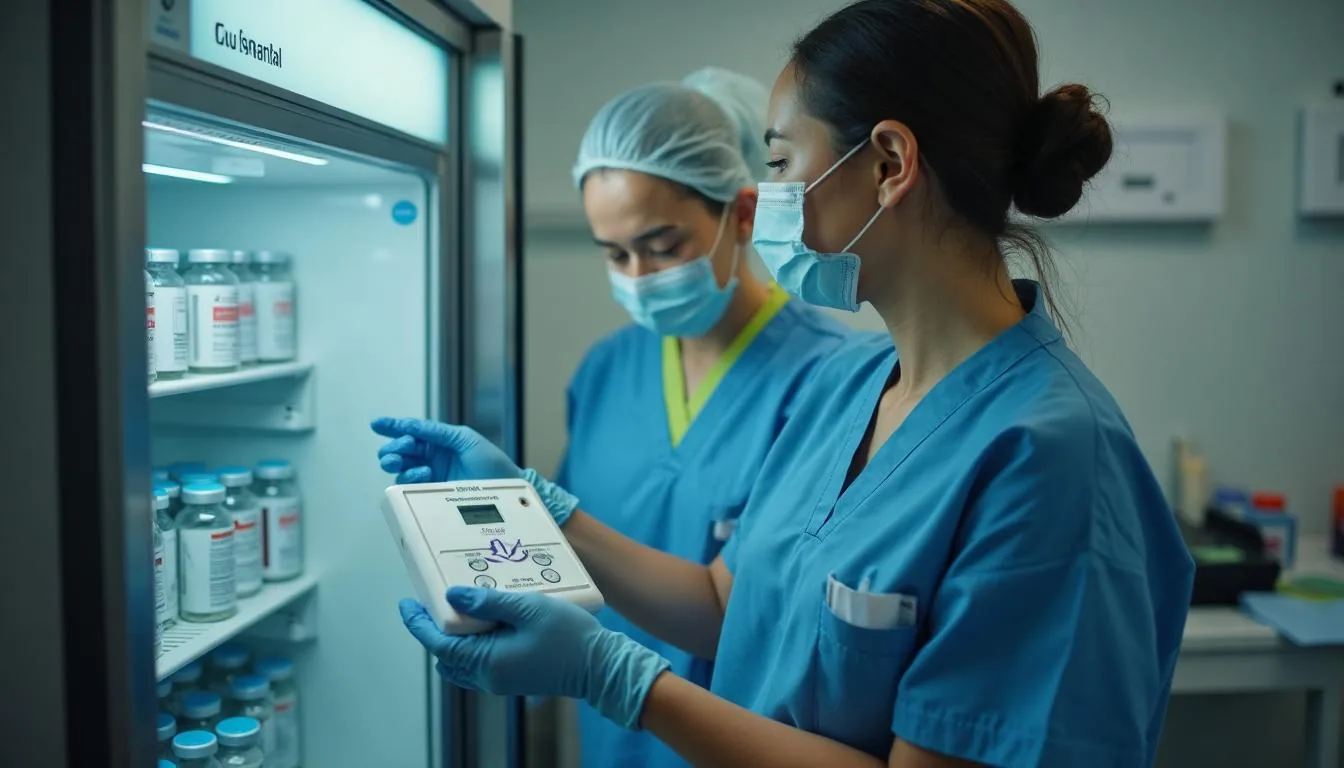
Vaccine inventory VFC software that keeps federal doses, private doses and the cold chain on one record
Vaccine inventory VFC is the stock control a clinic runs when part of its fridge belongs to the Vaccines for Children program: federally purchased doses that may only go to eligible children, held separately from privately purchased stock. The program is an entitlement written into 42 U.S.C. 1396s, and the storage rules are the CDC toolkit: 2 to 8 degrees Celsius in the refrigerator, temperatures recorded at least twice each workday, logs kept 3 years. Neurobird keeps both inventories and the cold chain on one record.
Neurobird Vaccine Inventory VFC in short
- Hold federal and private stock as separate ledgers against the same physical fridge
- Capture the eligibility decision at the visit and tie it to the dose that was given
- Track lot, expiry and quantity on hand so short dated stock is used before it is wasted
- 2 to 8 Storage units must maintain 2 to 8 degrees Celsius, which is 36 to 46 degrees Fahrenheit, for refrigerated vaccine, and minus 50 to minus 15 degrees Celsius for frozen vaccine, at all times. CDC, vaccine storage and handling toolkit
- 3 years CDC advises keeping temperature logs for 3 years so trends and recurring problems can be seen, which means the paper record outlives most of the vaccine it describes. CDC, vaccine storage and handling toolkit
- Pricing runs 180 to 780 US dollars per month across 3 tiers. Early access is free.
What VFC enrolled clinics and health departments actually deal with
Why it stays broken
A VFC clinic runs two inventories out of one appliance and answers to two different masters for them. The electronic health record knows the patient and the immunisation, the state registry knows the dose administered, and the fridge knows the temperature, but nothing holds the lot, the funding source and the eligibility decision together. So reconciliation is done by hand, once a month, from three exports that never quite agree.
Storage units must hold 2 to 8 degrees Celsius, which is 36 to 46 degrees Fahrenheit, at all times, and temperatures have to be checked and recorded at least twice each workday.
How does Neurobird Vaccine Inventory VFC work?
Every lot is a record
Vaccine, funding source, lot, expiry, storage unit and quantity on hand, held from receipt through administration or return.
Eligibility travels with the dose
The screening outcome recorded at the visit is stored on the administration event, so the federal ledger only moves when an eligible child was vaccinated.
The cold chain is evidence
Twice daily readings, excursion events and the calibration status of each device sit against the storage unit, so an investigation names the exact doses at risk.
Neurobird Vaccine Inventory VFC Document Automation Platform
Make the lot the record. Funding source, lot number, expiry, quantity on hand, the eligibility decision at each administration and the storage unit it came from all attach to the same object, so reconciliation is a query rather than a project.
- 1Hold federal and private stock as separate ledgers against the same physical fridge
- 2Capture the eligibility decision at the visit and tie it to the dose that was given
- 3Track lot, expiry and quantity on hand so short dated stock is used before it is wasted
- 4Keep vaccine cold chain logs and excursion investigations attached to the doses they affect
What changes with Neurobird Vaccine Inventory VFC?
The same work, read left to right: how it runs today, and how it runs once the record is in one place.
| Today | With Neurobird Vaccine Inventory VFC |
|---|---|
| Federal and private stock share a fridge, and the only thing keeping them apart is a shelf label and somebody's attention | Hold federal and private stock as separate ledgers against the same physical fridge |
| Eligibility is screened at the visit and recorded in the chart, so reconciling doses administered against doses ordered is a month end archaeology exercise | Capture the eligibility decision at the visit and tie it to the dose that was given |
| A temperature excursion means every dose in the unit is in question, and the evidence of what was stored where is a paper log in a binder | Track lot, expiry and quantity on hand so short dated stock is used before it is wasted |
Who is this for?
Same lot record, three different operations.
You run two inventories
A busy schedule and one fridge holding both federal and private stock. You need the split enforced at administration, not corrected at month end.
You supply other sites
Transfers, borrowing and returns between clinics. You need dose level movement history that a program review can follow.
You serve underinsured children
Eligibility categories that change between visits. You need the screening decision recorded with the dose that was given.
The fridge, lot by lot
A working preview. Tick a lot to move it through receipt, storage and administration.
Watch the fields extract from the document.
What actually governs vaccine inventory VFC
Useful if you are writing storage procedure or preparing for a compliance visit. Each figure links to the source.
Storage units must maintain 2 to 8 degrees Celsius, which is 36 to 46 degrees Fahrenheit, for refrigerated vaccine, and minus 50 to minus 15 degrees Celsius for frozen vaccine, at all times.
CDC, vaccine storage and handling toolkitCDC advises keeping temperature logs for 3 years so trends and recurring problems can be seen, which means the paper record outlives most of the vaccine it describes.
CDC, vaccine storage and handling toolkitStorage unit temperatures should be checked and recorded at least twice daily, at the start and the end of the workday, in addition to continuous monitoring by a digital data logger.
CDC, vaccine storage and handling toolkitCalibration testing of temperature monitoring devices should be performed every 2 to 3 years, or on the manufacturer's schedule, so the device that proves your cold chain is itself in date.
CDC, vaccine storage and handling toolkitThe statute names four federally vaccine eligible groups: Medicaid eligible children, uninsured children, uninsured children vaccinated at a federally qualified health centre or rural health clinic, and children who are Indian.
govinfo, 42 U.S.C. 1396sThe program has provided vaccine to states without charge since 1 October 1994, and a registered provider may not deny a dose to an eligible child because the family cannot pay the administration fee.
govinfo, 42 U.S.C. 1396sVaccine inventory vfc software questions, answered
Key terms
- What is the Vaccines for Children program?
- It is a federal entitlement, written into 42 U.S.C. 1396s, that buys childhood vaccine and supplies it to enrolled providers without charge for administration to eligible children. In return the provider agrees to screen eligibility, store the vaccine properly, keep records and account for every dose.
- What are the VFC storage requirements?
- They come from the CDC vaccine storage and handling toolkit. Refrigerated vaccine is held at 2 to 8 degrees Celsius and frozen vaccine at minus 50 to minus 15 degrees Celsius, every unit has a temperature monitoring device, readings are taken and recorded at least twice each workday, and logs are kept for 3 years.
Does this replace the immunisation registry?
No. Doses administered still flow to your state registry and the clinical record still lives in the EHR. What lives here is the stock: lot, expiry, funding source, storage unit and the eligibility decision behind each federal dose.
How does it keep federal and private stock apart?
By treating them as two ledgers over one physical unit. A dose leaves the federal ledger only when the recorded eligibility screening says the child qualified, so borrowing shows up as an event rather than as a discrepancy months later.
What happens after a temperature excursion?
The affected storage unit, the time range and the doses held in it are already linked, so the investigation names exactly which lots are in question and holds the manufacturer guidance and the outcome against them.
Can it handle transfers between sites?
Yes. Transfers, borrowing and returns are dose level movements with a source and a destination, which is what a program review asks to see when the counts do not match.
Why we are building this
A VFC clinic runs 2 inventories out of 1 fridge, and answers for both of them separately. The software most clinics have was built for 1 of those jobs and not the other.
So the eligibility decision sits in the chart, the stock count sits on a clipboard, the temperature log sits in a binder, and the month end reconciliation is somebody reading all 3 side by side.
We would rather build this with immunisation coordinators than with people who have read the toolkit. Tell us how your reconciliation runs, and where we have got it wrong.
Where the requirement comes from
The federal program documents a VFC clinic is enrolled and reviewed against.
- CDC, vaccine storage and handling toolkit The operational rulebook: temperature ranges, monitoring devices, twice daily readings, excursions and how long logs are kept.
- CDC, vaccine storage and handling The landing page for the toolkit and its addenda, updated as product specific storage requirements change.
- 42 U.S.C. 1396s, the VFC statute The program itself in law: who is federally vaccine eligible, what a program registered provider agrees to, and the entitlement to free vaccine.
- CDC, VFC operations guidance The primary source of guidance for program participants, which the storage toolkit is written to complement.
- Indiana Department of Health, Vaccines for Children A worked example of the state layer: enrolment, provider agreements and the accountability checks a clinic actually meets.
- New York State DOH, VFC storage and handling A state program restating the storage requirements a site is reviewed against, useful when writing local procedure.
How much does Neurobird Vaccine Inventory VFC cost?
Priced per site because fridges, the VFC provider agreement and storage procedure are site level things. Doses, lots and users are unlimited on every tier.
- Lot level inventory
- Federal and private ledgers
- Expiry views
- Temperature log capture
- Email support
- Everything in Single clinic
- Eligibility screening records
- Excursion investigations
- Monthly reconciliation
- Named contact
- Everything in Immunisation program
- Multi site transfers
- Program review exports
- Retention ready archives
- Onboarding included
Get free early access
If you run a VFC enrolled clinic, tell us what your monthly reconciliation actually costs you in hours.
Straight answer on where this is: In development. Early access gets the working preview, a say in what ships first, and early access pricing. It does not get you a login today.
Prefer email? Write to office@neurobird.com and a person will reply. No autoresponder.