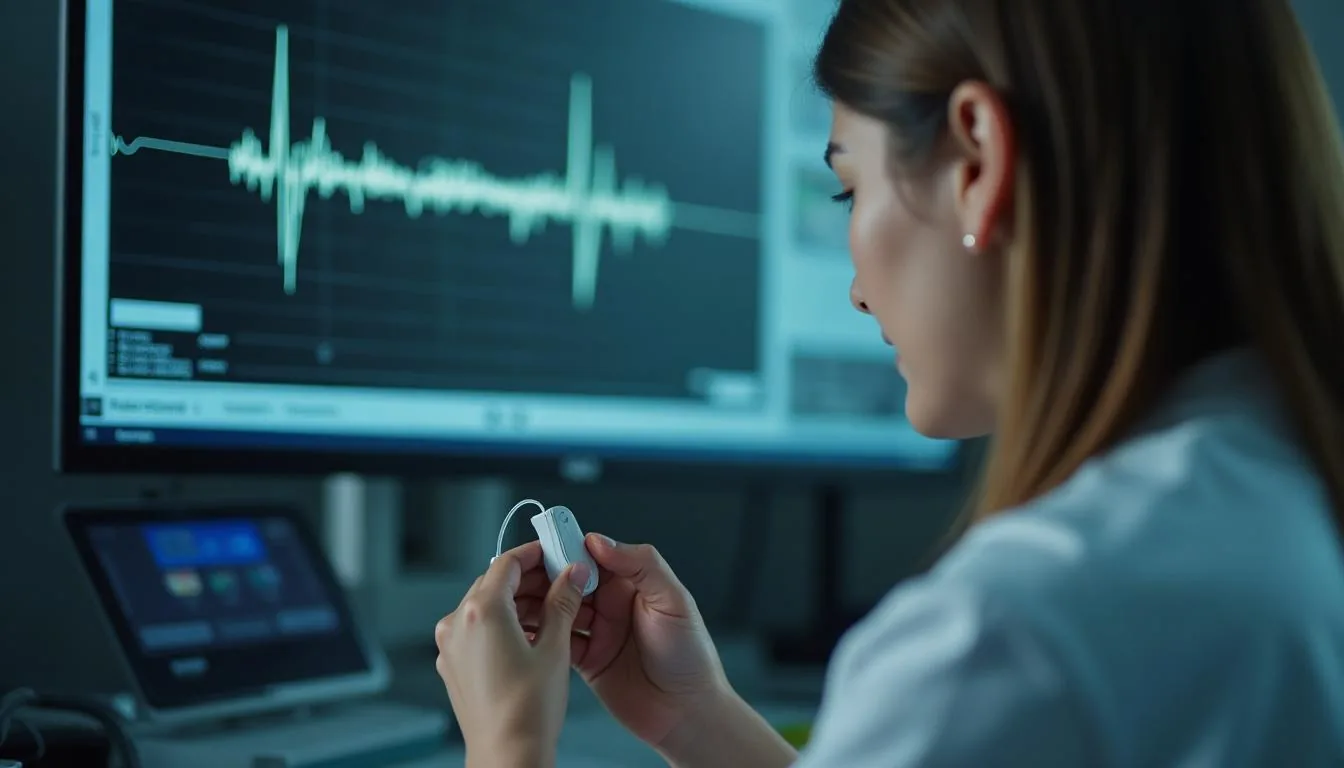
Audiology software that carries a fitting from the first audiogram to the end of the trial
Audiology hearing aid dispensing is the licensed work of testing hearing, selecting and fitting a hearing aid, and standing behind that fitting through the trial period and the follow up. FDA created a separate over the counter category in 21 CFR 800.30 for adults 18 and older with perceived mild to moderate hearing loss, capped at an output of 111 dB SPL, 117 dB SPL where input controlled compression is active, and designed to sit at least 10 millimeters from the eardrum. Neurobird holds the audiogram, the order and the trial clock on one patient record.
Neurobird Audiology Hearing Aid Dispensing in short
- Run the trial clock from the fitting date, per patient, with the return deadline visible before it passes
- Hold serial numbers, ear, manufacturer and warranty against the fitting rather than in a separate ledger
- Track repairs, remakes and credits back to the order they came from
- 28.8 million United States adults who could benefit from using hearing aids, on NIDCD calculations from national survey data. NIDCD, quick statistics about hearing
- 30% Among adults aged 70 and older with hearing loss who could benefit from hearing aids, fewer than 1 in 3 have ever used them. Among adults aged 20 to 69 it is about 16 percent. NIDCD, quick statistics about hearing
- Pricing runs 119 to 649 US dollars per month across 3 tiers. Early access is free.
What audiology and hearing aid practices actually deal with
Why it stays broken
Dispensing is a clinical record, a retail order and a warranty claim on the same person. Practice management software was built for the clinical half, manufacturer portals own the retail half, and the trial clock that decides whether money goes back sits between them. Nothing owns the middle, so it lives on paper and in memory.
Among adults aged 70 and older with hearing loss who could benefit from hearing aids, fewer than 1 in 3, about 30 percent, have ever used them.
An air-conduction hearing aid is a hearing aid that conducts sound to the ear through the air.
Neurobird Audiology Hearing Aid Dispensing Compliance Platform
One record per patient: the audiogram, the recommendation, the order with serial numbers by ear, the fitting and verification, the trial clock and every repair or remake after it.
- 1Run the trial clock from the fitting date, per patient, with the return deadline visible before it passes
- 2Hold serial numbers, ear, manufacturer and warranty against the fitting rather than in a separate ledger
- 3Track repairs, remakes and credits back to the order they came from
- 4Keep the audiogram and the verification with the aid that was actually dispensed
What changes with Neurobird Audiology Hearing Aid Dispensing?
The same work, read left to right: how it runs today, and how it runs once the record is in one place.
| Today | With Neurobird Audiology Hearing Aid Dispensing |
|---|---|
| The trial period runs from a date somebody wrote on a paper folder, and the refund argument starts there | Run the trial clock from the fitting date, per patient, with the return deadline visible before it passes |
| A patient calls about a repair and nobody can say which aid, which serial, which ear or which order it came from | Hold serial numbers, ear, manufacturer and warranty against the fitting rather than in a separate ledger |
| Manufacturer credits and remakes are tracked in an email folder rather than against the fitting they belong to | Track repairs, remakes and credits back to the order they came from |
Who is this for?
The same fitting, three different practices.
You test and dispense yourself
You need the audiogram, the order and the trial deadline in one place, because there is nobody else to hold the second half of it.
You run several rooms
A patient fitted in one office turns up in another for a repair. The fitting record has to travel with them.
You sell both sides of the counter
Prescription fittings and over the counter devices follow different rules. You need the record to know which one a patient actually left with.
A fitting, as your clinic would work it
Tick a step to move a patient from audiogram to end of trial and watch the deadline move with it.
| Requirement | Status | Next due | |
|---|---|---|---|
| Amaechi, right ear BTE, remake requested | current | in 42d | |
| Sandoval, custom ITE, impressions taken | due soon | in 9d | |
| Pruitt, bilateral, repair under warranty | current | in 120d | |
| Whitfield, bilateral RIC, trial ends in 9 days | overdue | 3d late | |
| Whitfield, bilateral RIC, trial ends in 9 days | current | in 64d |
Tick a requirement to file evidence against it.
What the numbers say about hearing aid dispensing
Federal figures on need and uptake, and the limits FDA put on the over the counter category.
United States adults who could benefit from using hearing aids, on NIDCD calculations from national survey data.
NIDCD, quick statistics about hearingAmong adults aged 70 and older with hearing loss who could benefit from hearing aids, fewer than 1 in 3 have ever used them. Among adults aged 20 to 69 it is about 16 percent.
NIDCD, quick statistics about hearingAn over the counter hearing aid may not exceed an output of 111 dB SPL at any frequency, or 117 dB SPL where input controlled compression is activated.
eCFR, 21 CFR 800.30(d)The design of an over the counter hearing aid must limit insertion so the deepest component is reasonably expected to stay at least 10 millimeters from the tympanic membrane.
eCFR, 21 CFR 800.30(e)The over the counter category is for people aged 18 or older with perceived mild to moderate hearing impairment, and sale to anyone younger is prohibited.
eCFR, 21 CFR 800.30(a)How does Neurobird Audiology Hearing Aid Dispensing work?
Test and recommend
The audiogram and the recommendation attach to the patient, so the reason for a given aid is still readable a year later.
Order and fit
The order carries serial numbers by ear, the manufacturer and the warranty term, and the fitting date starts the trial clock automatically.
Follow up and settle
Repairs, remakes, credits and returns all point back at the fitting, so the commercial history of a patient is one list.
Audiology hearing aid dispensing software questions, answered
Key terms
- What is an over the counter hearing aid?
- It is an air conduction hearing aid, defined in 21 CFR 800.30, that needs no implantation or surgery and is intended for people aged 18 or older with perceived mild to moderate hearing impairment. Output is capped at 111 dB SPL, or 117 dB SPL with input controlled compression, and the design must keep the deepest part at least 10 millimeters from the eardrum.
Does this replace our practice management system?
No. It sits beside it. Scheduling and claims stay where they are. This holds the fitting: the audiogram behind it, the serials by ear, the trial clock and every repair or credit that follows.
How does it handle the trial period?
The clock starts at the fitting date and the deadline is visible on the patient record from that moment, so a return conversation happens before the date rather than after it.
Can it track repairs and remakes?
Yes, against the fitting they belong to, with the manufacturer, the date sent, the date back and the credit if there was one, so the commercial history of a patient reads as one list.
Does it work for a practice that also sells OTC devices?
Yes. The record distinguishes a prescription fitting from an over the counter sale, because the two carry different obligations and you should not have to remember which is which.
Why we are building this
W
e
w
e
n
t
l
o
o
k
i
n
g
f
o
r
w
o
r
k
w
h
e
r
e
a
d
a
t
e
o
n
a
f
o
l
d
e
r
d
e
c
i
d
e
s
w
h
e
t
h
e
r
m
o
n
e
y
g
o
e
s
b
a
c
k
,
a
n
d
h
e
a
r
i
n
g
a
i
d
d
i
s
p
e
n
s
i
n
g
k
e
p
t
c
o
m
i
n
g
u
p
.
T
h
e
c
l
i
n
i
c
a
l
r
e
c
o
r
d
a
n
d
t
h
e
r
e
t
a
i
l
o
r
d
e
r
d
e
s
c
r
i
b
e
t
h
e
s
a
m
e
p
e
r
s
o
n
a
n
d
a
l
m
o
s
t
n
e
v
e
r
m
e
e
t
,
a
n
d
t
h
e
t
r
i
a
l
c
l
o
c
k
s
i
t
s
i
n
t
h
e
g
a
p
.
T
h
a
t
i
s
a
r
e
c
o
r
d
p
r
o
b
l
e
m
,
a
n
d
r
e
c
o
r
d
p
r
o
b
l
e
m
s
a
r
e
w
h
a
t
w
e
b
u
i
l
d
.
T
h
e
r
u
l
e
s
a
n
d
f
i
g
u
r
e
s
w
e
r
e
a
d
w
h
i
l
e
s
c
o
p
i
n
g
t
h
i
s
a
r
e
l
i
n
k
e
d
a
b
o
v
e
,
s
o
y
o
u
c
a
n
c
h
e
c
k
o
u
r
r
e
a
d
i
n
g
o
f
t
h
e
m
a
n
d
t
e
l
l
u
s
w
h
e
r
e
i
t
i
s
w
r
o
n
g
.
Where the requirement comes from
Primary sources, straight from the regulators.
- eCFR, 21 CFR 800.30, over the counter hearing aids The age limit, output limits, insertion depth limit and the labelling an OTC device must carry.
- eCFR, 21 CFR 801.422, hearing aid labelling The conditions and warnings that must appear in the user instructional brochure for a hearing aid.
- NIDCD, quick statistics about hearing Federal prevalence and uptake figures, including how few people who could benefit have ever tried an aid.
- California Speech-Language Pathology and Audiology and Hearing Aid Dispensers Board A worked example of a state board that licenses dispensers and sets the local trial and refund rules.
How much does Neurobird Audiology Hearing Aid Dispensing cost?
Priced per clinician, because the licence and the fitting decision belong to a person. Patients, fittings and repairs are unlimited on every tier.
- One clinician
- Unlimited patients and fittings
- Trial clock
- Repair tracking
- Up to 6 clinicians
- Multi office patient records
- Manufacturer credit log
- Verification records
- Unlimited offices
- Group reporting by clinician
- OTC and prescription split
- Priority support
Get free early access
Early access means we build the trial and return rules around the state you dispense in, and you keep the account free while we do it.
Straight answer on where this is: The software is in development. Nothing is purchasable today. Early access means you shape it and pay nothing while we build.
Prefer email? Write to office@neurobird.com and a person will reply. No autoresponder.