Home ›
Blog › Schema Markup for AI Citations
Technical
Schema Markup for AI Citations: The 8 Types That Actually Work in 2026
Neurobird Research Team · May 2026 · 9 min read
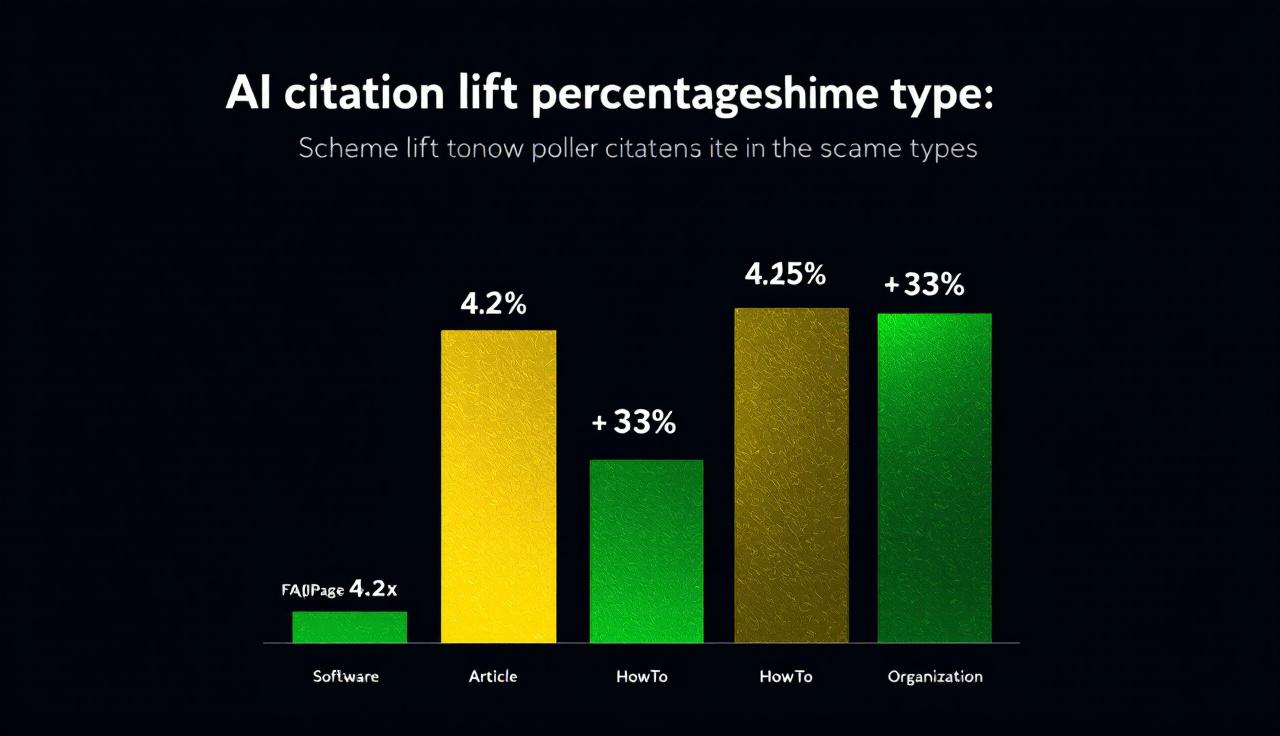
Schema type citation lift comparison: FAQPage (4.2× Perplexity), SoftwareApplication (+33% Gemini), Article (E-E-A-T signal across all engines)
Not all schema markup affects AI citations equally. Some types provide machine-readable structure that AI engines extract and cite directly. Others are Google-specific rich result signals with no measured GEO impact. This guide covers the 8 schema types with real, measured citation lift — with implementation examples for each.
4.2×
Citation lift from FAQPage schema on Perplexity (Perplexity data, 2024)
+33%
Gemini citation lift from SoftwareApplication schema (BrightEdge, 2026)
8
Schema types with measured AI citation impact in 2026
How schema markup affects AI citations
AI search engines parse JSON-LD schema in two ways: during index crawling (when they build their index) and during real-time browsing (when they're synthesizing an answer on the fly). Schema provides structured, machine-readable context that AI models prefer over extracting meaning from prose.
The core value: schema removes ambiguity. Instead of an AI model guessing what type of content your page is, what questions it answers, or what product it describes — you tell it directly in a format designed for machines.
Implementation note: All schema in this guide uses JSON-LD format placed in a <script type="application/ld+json"> tag in the page <head>. JSON-LD is preferred over Microdata or RDFa for AI engine compatibility.
The 8 schema types with measured AI citation impact
The highest-ROI schema type for AI citations. FAQPage provides pre-structured question-answer pairs that AI engines extract and use directly in answers. Write FAQ items that match exact user query language — not marketing copy.
Works on: Perplexity, ChatGPT, Claude, Gemini, Grok
{
"@context": "https://schema.org",
"@type": "FAQPage",
"mainEntity": [
{
"@type": "Question",
"name": "What is GEO?",
"acceptedAnswer": {
"@type": "Answer",
"text": "GEO (Generative Engine Optimization) is the practice of optimizing websites to be cited by AI search engines like ChatGPT, Perplexity, and Claude."
}
}
]
}
Required for blog posts and content pages. datePublished and dateModified are critical for freshness scoring. author with a name and URL adds E-E-A-T signals. Without Article schema, AI engines have no machine-readable signal for when the content was written or by whom.
Works on: All AI engines — freshness and authorship signals
{
"@context": "https://schema.org",
"@type": "Article",
"headline": "Article Title Here",
"datePublished": "2026-05-01",
"dateModified": "2026-05-05",
"author": {
"@type": "Person",
"name": "Author Name",
"url": "https://example.com/author"
},
"publisher": {
"@type": "Organization",
"name": "Company Name",
"url": "https://example.com"
}
}
The entity foundation. Organization schema with sameAs links (LinkedIn, Crunchbase, GitHub, ProductHunt) is how AI engines build confidence that your brand exists and is the entity they think it is. Without sameAs, you're one of potentially many businesses with the same name.
Works on: All AI engines — brand disambiguation and entity confidence
{
"@context": "https://schema.org",
"@type": "Organization",
"name": "Your Company",
"url": "https://yoursite.com",
"description": "What your company does",
"sameAs": [
"https://www.linkedin.com/company/yourcompany",
"https://github.com/yourcompany",
"https://www.crunchbase.com/organization/yourcompany"
]
}
For SaaS products and web apps. SoftwareApplication with applicationCategory, operatingSystem, and AggregateRating tells Gemini and other AI engines that you're a software product, not just a website. BrightEdge (2026) measured +33% Gemini citation frequency for pages with this schema vs equivalent pages without.
Works on: Gemini, ChatGPT, Perplexity — strong for product-category queries
{
"@context": "https://schema.org",
"@type": "SoftwareApplication",
"name": "Product Name",
"applicationCategory": "BusinessApplication",
"operatingSystem": "Web",
"offers": {
"@type": "Offer",
"price": "49",
"priceCurrency": "USD"
},
"aggregateRating": {
"@type": "AggregateRating",
"ratingValue": "4.8",
"reviewCount": "47"
}
}
HowTo schema marks up step-by-step processes that AI engines can extract and present as structured procedures. When a user asks "How do I [do X]?", AI engines prefer to cite sources with HowTo schema because the steps are machine-readable. Write each step as a complete, actionable instruction.
Works on: ChatGPT, Perplexity, Claude — high value for instructional content
{
"@context": "https://schema.org",
"@type": "HowTo",
"name": "How to [Process Name]",
"step": [
{ "@type": "HowToStep", "position": 1, "name": "Step 1 Name", "text": "Step 1 instructions." },
{ "@type": "HowToStep", "position": 2, "name": "Step 2 Name", "text": "Step 2 instructions." }
]
}
Product schema with AggregateRating and Review objects is critical for "best X" and comparison queries. AI engines trust products with machine-readable ratings over products with no schema. Include at least 3 Review objects with ratingValue, author, and reviewBody.
Works on: All engines — strongest for commercial intent queries
{
"@context": "https://schema.org",
"@type": "Product",
"name": "Product Name",
"aggregateRating": {
"@type": "AggregateRating",
"ratingValue": "4.9",
"reviewCount": "312"
},
"review": [
{
"@type": "Review",
"reviewRating": { "@type": "Rating", "ratingValue": "5" },
"author": { "@type": "Person", "name": "Reviewer Name" },
"reviewBody": "Review text here."
}
]
}
SpeakableSpecification marks the CSS selectors of your most important content for voice assistant and AI audio output. It tells AI engines which parts of the page are the canonical, cite-worthy content. Applied via cssSelector property inside a WebPage schema.
Works on: Google Assistant, Apple Intelligence, Claude voice — growing signal
{
"@context": "https://schema.org",
"@type": "WebPage",
"speakable": {
"@type": "SpeakableSpecification",
"cssSelector": ["h1", ".lead", ".faq-question", ".faq-answer"]
}
}
DefinedTermSet and DefinedTerm mark your glossary content as machine-readable definitions. When users ask "What is [term]?" queries, AI engines prefer to cite sources that have DefinedTerm schema because the answer is unambiguous. Critical for glossary pages and definition-heavy content.
Works on: All engines — strong for "what is X" queries
{
"@context": "https://schema.org",
"@type": "DefinedTermSet",
"name": "GEO Glossary",
"hasDefinedTerm": [
{
"@type": "DefinedTerm",
"name": "GEO",
"description": "Generative Engine Optimization — the practice of optimizing websites to be cited by AI search engines."
}
]
}
Implementation priority by site type
- SaaS / software product: Organization → SoftwareApplication → FAQPage → Product → HowTo
- Blog / content site: Organization → Article → FAQPage → DefinedTermSet → SpeakableSpecification
- E-commerce: Organization → Product + AggregateRating → FAQPage → HowTo
- Agency / services: Organization → FAQPage → HowTo → SpeakableSpecification
Is your schema GEO-ready?
Neurobird audits your JSON-LD schema for all 8 citation-critical types and generates the missing ones automatically — free to check.
Audit your schema free →
Watch — video explainer
Step-By-Step GEO Optimization for Blogs — Schema & More
Individual creator walkthrough of GEO schema implementation
Frequently Asked Questions
Which schema type has the highest impact on AI citations in 2026?
FAQPage schema has the highest measured impact: 4.2× more citations on Perplexity compared to pages without it. It works because it provides AI engines with pre-structured question-answer pairs they can extract directly, without parsing unstructured prose.
Does JSON-LD schema actually affect AI search citations?
Yes. AI search engines parse JSON-LD during indexing and real-time browsing. Schema provides machine-readable context that AI models use for entity disambiguation, content extraction, and citation confidence scoring. Pages with comprehensive schema are cited more frequently and more accurately than equivalent pages without it.
How many schema types should I add to a single page?
Typically 3–5 schema types on a homepage and 2–3 on article pages. The key is relevance — only add schema types that accurately describe the page content. An Organization schema on every page, FAQPage where you have Q&A content, Article on blog posts, SoftwareApplication on product pages, and Product schema where you sell something.
← Back to blog