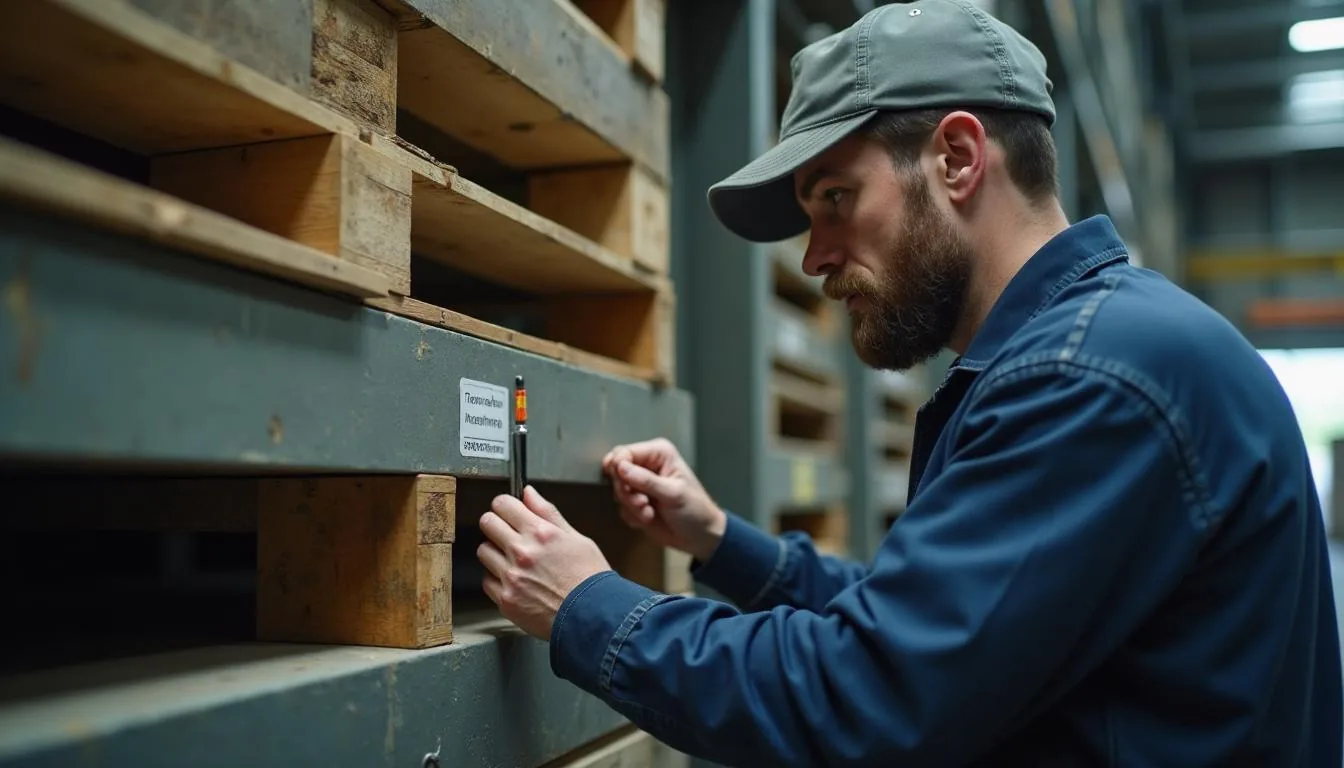
Pallet dunnage management software that keeps every treated board, stamp and pool balance on one record
Pallet dunnage management is the control of the wood that carries and braces a load: pallets, skids, crating, packing blocks and the loose dunnage wedged around freight. Once that wood crosses a border it is a regulated article. Under 7 CFR 319.40-1 regulated wood packaging material covers dunnage, crating, pallets, packing blocks, drums, cases and skids, excluding wood pieces less than 6 mm thick. Neurobird holds the pool, the treatment and the mark on one record.
Neurobird Pallet Dunnage Management in short
- Hold pool balances per customer and per location so the quarterly argument becomes a statement
- Separate treated and marked stock from domestic stock at the point it is received, not at the dock door
- Attach the treatment certificate to the lot it covers rather than to an inbox
- 56 degrees Celsius Minimum core temperature for conventional heat chamber treatment under ISPM 15, held for a minimum of 30 minutes. Where dielectric heating is used, the wood must reach 60 degrees Celsius for 1 minute continuously throughout the entire profile, including its surfaces. USDA Forest Products Laboratory GTR-282
- 6 mm Thickness below which wood pieces fall outside the definition of regulated wood packaging material. Above it, dunnage, crating, pallets, packing blocks, drums, cases and skids are all regulated articles when used with cargo. 7 CFR 319.40-1
- Pricing runs 159 to 1250 US dollars per month across 3 tiers. Early access is free.
What shippers, warehouses and pallet pools actually deal with
Why it stays broken
Pallets are treated as packaging, which means nobody owns them. Purchasing buys them, the warehouse issues them, the customer keeps them and the export desk is the only person who cares whether the stamp is genuine. The federal rule sits in plant health regulations rather than in transport rules, so warehouse software counts pallets as a consumable and never records which ones were heat treated, who treated them, or where the mark came from.
Under 7 CFR 319.40-7 no more than 2 percent of the surface of the regulated articles in a lot may retain bark, with no single article retaining bark on more than 5 percent of its surface.
Heat chamber is defined as any enclosed equipment used to heat-treat lumber or wood packaging material and includes kiln, heat boxes, or any other appropriate apparatus.
The wood board, as your yard would work it
Issue a load and watch the pool balance, the treated stock and the lot trace move together.
Tap an asset to log a scan and timestamp the inspection.
Neurobird Pallet Dunnage Management Inspection Tracking Platform
One record per pool and per load: what wood you hold, which of it is treated and marked, what went out under which bill of lading, what came back, and which treatment certificate stands behind the stock that shipped.
- 1Hold pool balances per customer and per location so the quarterly argument becomes a statement
- 2Separate treated and marked stock from domestic stock at the point it is received, not at the dock door
- 3Attach the treatment certificate to the lot it covers rather than to an inbox
- 4Record dunnage issued against the load so an export shipment can be reconstructed after a refusal
What changes with Neurobird Pallet Dunnage Management?
The same work, read left to right: how it runs today, and how it runs once the record is in one place.
| Today | With Neurobird Pallet Dunnage Management |
|---|---|
| An export load leaves on untreated dunnage and comes back as a refusal at the port of entry | Hold pool balances per customer and per location so the quarterly argument becomes a statement |
| The pallet pool balance with a customer is a number two people argue about every quarter | Separate treated and marked stock from domestic stock at the point it is received, not at the dock door |
| Heat treatment certificates live in a supplier's email rather than against the stock that was treated | Attach the treatment certificate to the lot it covers rather than to an inbox |
Who is this for?
The same stack of wood, three very different problems.
You ship internationally every week
One untreated block can hold a container. You need treated stock segregated and traceable to the lot that shipped.
You hold wood that belongs to customers
Pallet balances are a running account with each client. You need issues and returns recorded as they happen.
You lose pallets into the supply chain
The leak is real money and nobody can point at it. You need balances by customer and by location that survive an audit.
What the rules say about wood packaging
What counts as regulated wood, how it must be treated and marked, how clean it has to be, and the workplace rules that apply once it is stacked in your building.
Minimum core temperature for conventional heat chamber treatment under ISPM 15, held for a minimum of 30 minutes. Where dielectric heating is used, the wood must reach 60 degrees Celsius for 1 minute continuously throughout the entire profile, including its surfaces.
USDA Forest Products Laboratory GTR-282Thickness below which wood pieces fall outside the definition of regulated wood packaging material. Above it, dunnage, crating, pallets, packing blocks, drums, cases and skids are all regulated articles when used with cargo.
7 CFR 319.40-1Where the mark should preferably appear on each article: in a visible location, legible and permanent, in a form approved by the International Plant Protection Convention, after treatment in accordance with 7 CFR part 305.
7 CFR 319.40-3Maximum share of the surface of all regulated articles in a lot that may retain bark, with no single article above 5 percent. For raw lumber, debarking must remove 100 percent of the bark.
7 CFR 319.40-7Maximum interval between evaluations of a powered industrial truck operator's performance, which is the rule that governs the forklift moving every pallet in the building.
29 CFR 1910.178Retention period for the written agreements and procedures behind sanitary food transportation, counted from when those agreements and procedures are last in use, which reaches the dunnage and packaging used in a food load.
21 CFR 1.912How does Neurobird Pallet Dunnage Management work?
Receive the wood
Treated and marked stock is booked separately from domestic stock, with the supplier, the mark and the certificate recorded against the lot.
Issue against the load
Pallets and dunnage leave against a shipment and a customer, so the pool balance moves as the freight does rather than at a stocktake.
Prove the shipment
Every export load can show which lot of treated wood carried it, which is the only answer that helps when an inspection stops a container.
Pallet dunnage management software questions, answered
Key terms
- What is pallet dunnage management?
- Pallet dunnage management is the control of the wood that carries and braces freight: pallets, skids, crating, packing blocks and loose dunnage. It covers what you hold, whose it is, which of it is heat treated and marked for export, and which lot carried a particular load.
- What are the ISPM 15 requirements for wood packaging?
- Under 7 CFR 319.40-3 regulated wood packaging material must be treated in accordance with 7 CFR part 305 and marked in a visible location, preferably on at least two opposite sides, with a legible and permanent mark approved by the International Plant Protection Convention. Conventional heat treatment means a core temperature of 56 degrees Celsius held for at least 30 minutes.
Is dunnage regulated in the same way as a pallet?
Yes. 7 CFR 319.40-1 defines regulated wood packaging material to include dunnage, crating, pallets, packing blocks, drums, cases and skids, so a loose brace board is as regulated as the pallet under the load. Wood pieces less than 6 mm thick in any dimension are excluded.
How much bark is allowed on treated wood?
Under 7 CFR 319.40-7 no more than 2 percent of the surface of all regulated articles in a lot may retain bark, and no single article may retain bark on more than 5 percent of its surface. Raw lumber must be 100 percent debarked.
Does this replace our warehouse management system?
No. It sits beside it. The warehouse system moves inventory. This holds the wood: pool balances by customer, treated stock kept apart from domestic stock, the treatment certificate against the lot, and which lot went out on which load.
Why we are building this
W
e
w
e
n
t
l
o
o
k
i
n
g
f
o
r
a
s
s
e
t
s
t
h
a
t
n
o
b
o
d
y
o
w
n
s
,
a
n
d
p
a
l
l
e
t
s
w
e
r
e
t
h
e
c
l
e
a
r
e
s
t
e
x
a
m
p
l
e
.
T
h
e
y
a
r
e
o
n
e
v
e
r
y
b
a
l
a
n
c
e
s
h
e
e
t
a
s
a
c
o
n
s
u
m
a
b
l
e
a
n
d
i
n
e
v
e
r
y
w
a
r
e
h
o
u
s
e
a
s
a
r
u
n
n
i
n
g
a
r
g
u
m
e
n
t
,
a
n
d
t
h
e
m
o
m
e
n
t
o
n
e
c
r
o
s
s
e
s
a
b
o
r
d
e
r
t
h
e
w
o
o
d
i
t
s
e
l
f
b
e
c
o
m
e
s
a
r
e
g
u
l
a
t
e
d
a
r
t
i
c
l
e
w
i
t
h
a
t
e
m
p
e
r
a
t
u
r
e
,
a
t
i
m
e
a
n
d
a
s
t
a
m
p
b
e
h
i
n
d
i
t
.
A
l
m
o
s
t
n
o
b
o
d
y
r
e
c
o
r
d
s
w
h
i
c
h
l
o
t
c
a
r
r
i
e
d
w
h
i
c
h
l
o
a
d
.
T
h
a
t
i
s
a
r
e
c
o
r
d
p
r
o
b
l
e
m
,
a
n
d
r
e
c
o
r
d
p
r
o
b
l
e
m
s
a
r
e
w
h
a
t
w
e
b
u
i
l
d
.
T
h
e
r
e
g
u
l
a
t
i
o
n
s
a
n
d
t
h
e
F
o
r
e
s
t
S
e
r
v
i
c
e
r
e
s
e
a
r
c
h
w
e
r
e
a
d
a
r
e
l
i
n
k
e
d
a
b
o
v
e
.
I
f
w
e
h
a
v
e
a
f
i
g
u
r
e
w
r
o
n
g
,
t
e
l
l
u
s
.
Where the requirement comes from
Primary sources, straight from the regulators.
- 7 CFR 319.40-1, definitions of regulated wood packaging material Exactly which wood is regulated, including dunnage, and the 6 mm thickness carve out.
- 7 CFR 319.40-3, importation of regulated wood packaging material The treatment requirement and how the approved mark must be applied to each article.
- 7 CFR 319.40-7, treatments and safeguards The debarking limits and what happens when a certificate turns out to be inaccurate.
- USDA Forest Products Laboratory, heat sterilization of wood packaging The temperature and time targets behind the stamp, and why a wet load takes longer to reach them.
- 29 CFR 1917.14, stacking of cargo and pallets The short, blunt rule on tiered storage stability that governs every stack of empties.
- US Customs and Border Protection, wood packaging materials The enforcement side at the border, which is where a missing mark actually stops a shipment.
How much does Neurobird Pallet Dunnage Management cost?
Priced per site because the pool balance and the treatment record belong to the location that holds the wood. Pallets, dunnage, lots and loads are unlimited on every tier.
- One location
- Pool balances by customer
- Treated stock segregation
- Certificate vault
- Up to 10 locations
- Lot level traceability
- Issue and return by load
- Export documentation
- Unlimited locations
- Supplier treatment audits
- Customer statements
- Priority support
Get free early access
Early access means we load your pool balances, your suppliers and your treatment certificates before you type anything, and the account stays free while we do it.
Straight answer on where this is: The software is in development. Nothing is purchasable today. Early access means you shape it and pay nothing while we build.
Prefer email? Write to office@neurobird.com and a person will reply. No autoresponder.