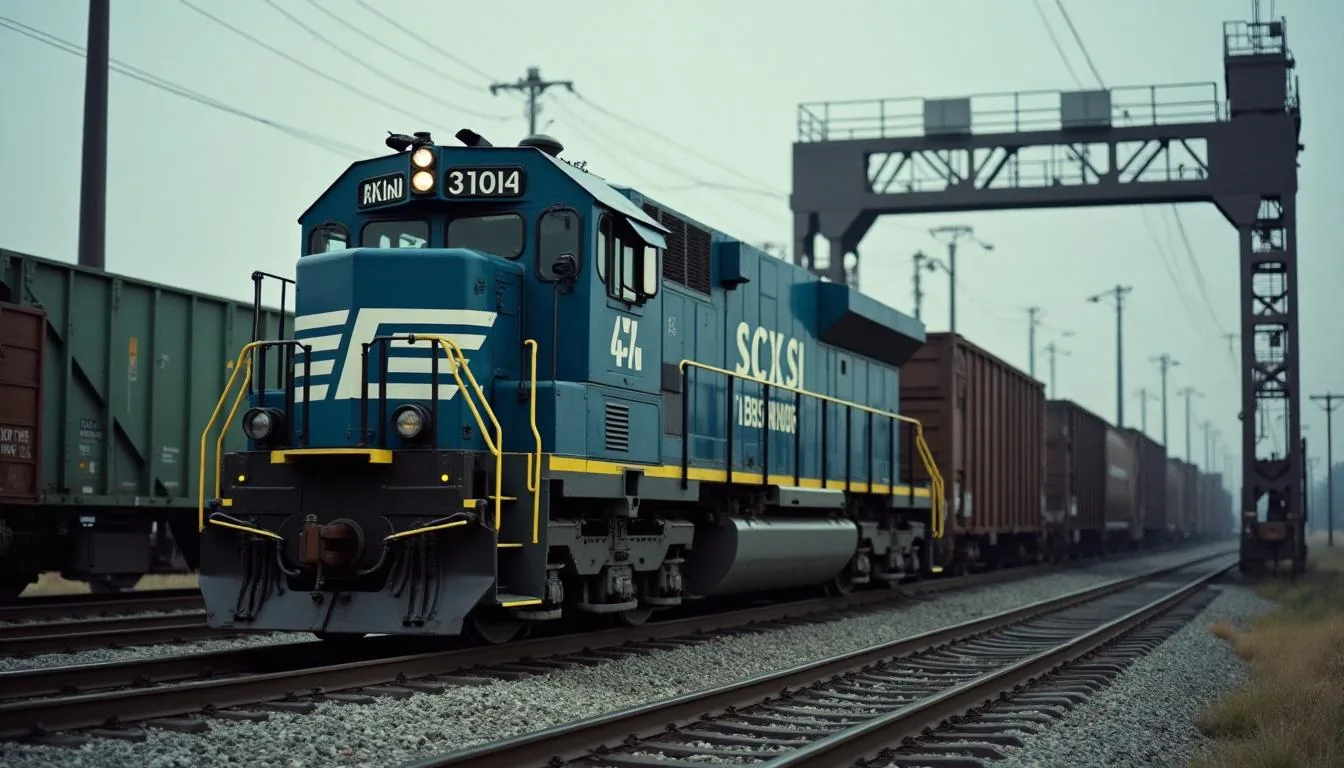
Short line railroad software that tracks the car, the clock and the track class
A short line railroad is a Class III carrier operating a limited network and feeding traffic to a larger connection at an interchange. It carries full federal safety obligations: track safety standards at 49 CFR Part 213 tie speed to condition, with Class 1 track limited to 10 mph freight, Class 2 to 25 mph and Class 3 to 40 mph. Neurobird holds car location, the demurrage and car hire clocks, and maintenance spend by mile for the 45G credit.
Neurobird Short Line Railroad in short
- Track every car from interchange through placement, release and return
- Start demurrage and car hire clocks at the event rather than from memory
- Keep track class, inspection records and defects tied to the segment they belong to
- Part 213 FRA track safety standards tie maximum operating speed to track class, with Class 1 at 10 mph for freight, Class 2 at 25 mph and Class 3 at 40 mph, plus prescribed inspection frequencies. eCFR, 49 CFR Part 213
- Part 214 Railroad workplace safety, including roadway worker protection, which governs how track work is planned and protected. eCFR, 49 CFR Part 214
- Pricing runs 6 to 22 US dollars per month across 3 tiers. Early access is free.
What short line and regional railroads actually deal with
Why it stays broken
Rail software was written for Class I railroads running thousands of route miles and priced accordingly. An 84 mile carrier with 6 employees gets a spreadsheet and a radio, and carries the same 49 CFR obligations.
Six foreign cars sitting 3 extra days is per diem you paid and demurrage you never billed.
Form STB-54 requires Class I railroads to report the number of cars loaded and terminated, by car type, during each calendar year and is due 90 days after the end of the reporting year (March 31).
Neurobird Short Line Railroad Dispatch Platform
Make the car the record and the event the trigger. Placement, release and interchange start and stop every clock that matters.
- 1Track every car from interchange through placement, release and return
- 2Start demurrage and car hire clocks at the event rather than from memory
- 3Keep track class, inspection records and defects tied to the segment they belong to
- 4Assemble maintenance spend by mile so the annual credit claim is not a receipt hunt
What changes with Neurobird Short Line Railroad?
The same work, read left to right: how it runs today, and how it runs once the record is in one place.
| Today | With Neurobird Short Line Railroad |
|---|---|
| Car location is a conductor's radio call and a spreadsheet that is accurate until the next switch job | Track every car from interchange through placement, release and return |
| Demurrage and car hire both run on clocks nobody starts on time, so revenue leaks and per diem quietly accrues | Start demurrage and car hire clocks at the event rather than from memory |
| Track inspection records, class designations and maintenance spend sit in three places, and the 45G claim gets rebuilt from receipts every year | Keep track class, inspection records and defects tied to the segment they belong to |
Who is this for?
Same railroad, three different jobs.
You run the trains
Car location and placement decide service. You need it current after every switch job, not at the end of the week.
You bill the customers
Demurrage and car hire are real revenue and real cost. You need the clocks started by events, not by recollection.
You own several short lines
Each property reports differently. You need one operating record and one view of maintenance spend against mileage.
The car, as your trainmaster would track it
A working preview. Tick an event to move the car through the cycle.
Drag a job onto a crew to assign it.
How does Neurobird Short Line Railroad work?
Track the car
Every car carries its own record from interchange receipt through placement, release and return, with location updated at the event rather than at shift end.
Run the clocks from events
Demurrage free time and car hire start when the car is actually placed or received, so 48 free hours is a fact rather than an argument.
Tie work to the track
Inspections, defects, class designation and maintenance spend attach to the segment, so an annual credit claim is assembled rather than reconstructed.
What a Class III railroad is actually required to do
Useful if you operate a short line or are acquiring one. Each source links out.
FRA track safety standards tie maximum operating speed to track class, with Class 1 at 10 mph for freight, Class 2 at 25 mph and Class 3 at 40 mph, plus prescribed inspection frequencies.
eCFR, 49 CFR Part 213Railroad workplace safety, including roadway worker protection, which governs how track work is planned and protected.
eCFR, 49 CFR Part 214Accident and incident reporting requirements, including the monetary damage threshold FRA adjusts annually and the records a railroad must keep.
eCFR, 49 CFR Part 225The railroad track maintenance credit is claimed on IRS Form 8900 and limited by a per mile cap, which makes spend by mileage a filing requirement rather than a nicety.
IRS Form 8900The Surface Transportation Board sets railroad revenue class definitions and publishes the economic data behind rate and service oversight.
Surface Transportation BoardShort line railroad software questions, answered
Key terms
- What is a short line railroad?
- A short line railroad is a Class III carrier operating a limited network, typically feeding traffic to a larger connection at an interchange point. Revenue class definitions come from the Surface Transportation Board, and short lines carry the same federal safety obligations as much larger railroads, including track standards, employee protection and accident reporting.
- What is car hire and why does it matter so much?
- Car hire, often called per diem, is what a railroad pays for the use of another railroad's or a private owner's car while it is on its line. The clock runs whether or not the car is doing anything, so cars parked at a customer waiting to be released are a running cost.
- What is the 45G credit?
- A federal tax credit for railroad track maintenance available to Class II and Class III railroads. It is claimed on Form 8900 and is limited by a per mile cap of $3,500 multiplied by the eligible track miles, which is why maintenance spend needs to be recorded against mileage as it happens.
What sets the speed on our track?
Track class. FRA track safety standards at 49 CFR Part 213 tie maximum allowable operating speed to the condition and geometry of the track, with Class 1 track limited to 10 mph for freight, Class 2 to 25 mph and Class 3 to 40 mph. Inspection frequency and defect remediation are prescribed in the same part.
Does this replace our accounting or dispatch system?
No. It holds the operating record: car location, interchange events, clocks, track class and maintenance by segment. Whatever you use for billing and general ledger reads from it.
Why we are building this
A short line carries a Class I rulebook on a small business budget. Track standards, roadway worker protection and accident reporting do not scale down with route miles.
The software market never followed. Systems built for the large carriers are priced for them, so an 84 mile railroad ends up running its car fleet on a spreadsheet and its credit claim on a shoebox of receipts.
We would rather build this with people who have worked the property. Tell us how your railroad runs, and where we have got it wrong.
Where the requirement comes from
The federal rules a Class III carrier works to.
- 49 CFR Part 213, track safety standards Track classes, speed limits, inspection frequency and defect remediation requirements.
- 49 CFR Part 214, railroad workplace safety Roadway worker protection and workplace safety rules governing track work.
- 49 CFR Part 225, accident reporting What must be reported to FRA, on what forms, and the records a railroad has to keep.
- IRS Form 8900, railroad track maintenance credit The form and instructions for claiming the track maintenance credit, including the per mile limitation.
How much does Neurobird Short Line Railroad cost?
Priced per route mile because that is how a short line is actually sized. Unlimited users, cars and customers.
- Car location register
- Interchange events
- Customer placements
- Basic reporting
- Email support
- Everything in Short line
- Demurrage clocks
- Car hire tracking
- Track class and inspections
- Named contact
- Everything in Regional
- Multi railroad roll up
- 45G maintenance by mile
- Accounting export
- Onboarding included
Get free early access
If you operate a short line, tell us how car location is tracked today and what your demurrage billing looks like.
Straight answer on where this is: In development. Early access gets the working preview, a say in what ships first, and early access pricing. It does not get you a login today.
Prefer email? Write to office@neurobird.com and a person will reply. No autoresponder.