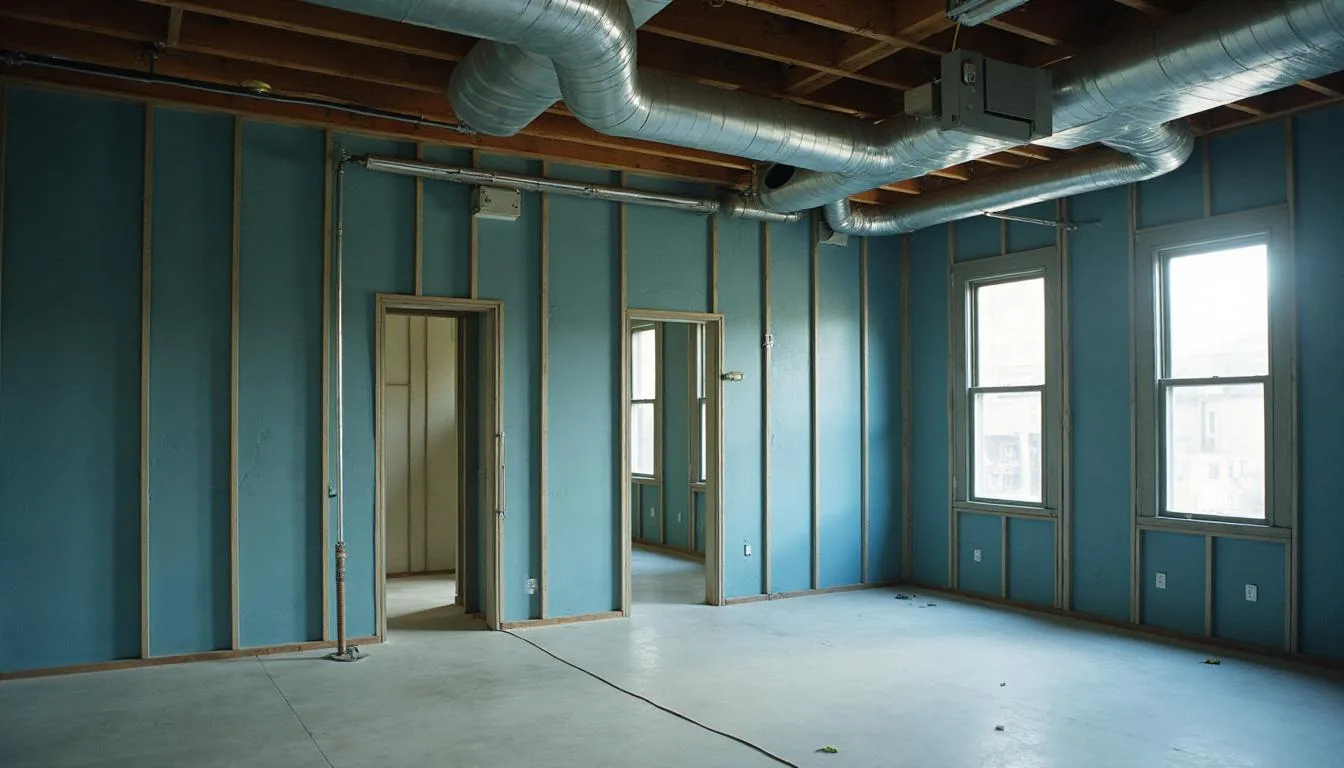
Tenant improvement software that tracks the allowance, the changes and the delivery date
Tenant improvement construction is the interior build out of leased commercial space to a specific tenant's requirements: demising walls, ceilings, mechanical, electrical, millwork and finishes, funded partly by a landlord allowance and driven by a lease date. Total US construction spending runs above a 2.1 trillion dollar annual rate, and interiors carry the tightest schedules in it because rent commencement does not wait. Neurobird tracks the allowance, the changes and the long lead items against that date.
Neurobird Tenant Improvement Construction in short
- Track allowance drawdown against the lease number rather than against last month's pay application
- Classify every change order as landlord, tenant or shared at the moment it is raised
- Hold long lead items against the delivery date so slippage is visible before it is terminal
- $2.1T Approximate annual rate of total US construction spending, of which interior alterations are a persistent and schedule critical share. US Census Bureau, construction spending
- 1 work letter Federal leasing practice separates standard from above standard tenant improvements, the same split that decides who pays for a change in commercial work. GSA, above standard tenant improvements
- Pricing runs 160 to 700 US dollars per month across 3 tiers. Early access is free.
What tenant improvement contractors and interiors builders actually deal with
Why it stays broken
Construction software is built around cost codes and pay applications. A TI project turns on 3 other things: the allowance balance, who owns each change, and whether the switchgear arrives before the lease date.
A $210,000 allowance misclassified by 20 percent moves $42,000 to whichever party reads the lease later.
The Leasing Specialist must send a copy of the NTP to the Budget Office within 5 days of signing the letter.
Neurobird Tenant Improvement Construction Document Automation Platform
Hold the lease terms and the allowance as data, then run the project against them. The classification argument happens once, at the change, not at closeout.
- 1Track allowance drawdown against the lease number rather than against last month's pay application
- 2Classify every change order as landlord, tenant or shared at the moment it is raised
- 3Hold long lead items against the delivery date so slippage is visible before it is terminal
- 4Run the punch list and closeout so substantial completion is documented, not negotiated
What changes with Neurobird Tenant Improvement Construction?
The same work, read left to right: how it runs today, and how it runs once the record is in one place.
| Today | With Neurobird Tenant Improvement Construction |
|---|---|
| The allowance is a fixed number in the lease and the drawdown is tracked in a spreadsheet that lags the field by 2 weeks | Track allowance drawdown against the lease number rather than against last month's pay application |
| Every change order has to be classified as landlord work or tenant work, and getting that wrong moves 6 figures to the wrong party | Classify every change order as landlord, tenant or shared at the moment it is raised |
| Rent commencement is tied to substantial completion, so a 3 week long lead item turns into a rent argument | Hold long lead items against the delivery date so slippage is visible before it is terminal |
Who is this for?
Same build out, three different exposures.
You build the space
You are judged on the delivery date and paid on approved costs. You need the allowance position and the long leads visible weekly.
You protect the allowance
Every change is a classification decision with money attached. You need the work letter attached to each one.
You protect the date
Rent starts whether the space is ready or not. You need slippage visible early enough to do something about it.
The project, as your PM would run it
A working preview. Tick a scope item to draw it against the allowance.
Watch the fields extract from the document.
What lease driven interior work actually involves
Useful if you are scoping a build out or negotiating a work letter. Each source links out.
Approximate annual rate of total US construction spending, of which interior alterations are a persistent and schedule critical share.
US Census Bureau, construction spendingFederal leasing practice separates standard from above standard tenant improvements, the same split that decides who pays for a change in commercial work.
GSA, above standard tenant improvementsThe federal leasing desk guide devotes a full chapter to alterations in leased space, which is a useful public model for how alteration authority and payment are handled.
GSA Leasing Desk GuideOSHA construction standards sit in 29 CFR 1926 and apply to interior build out the same as to ground up work, including fall protection above 6 feet.
OSHA, constructionEstablishment counts by industry show how many specialty interiors contractors operate, useful when sizing a subcontractor market.
US Census County Business PatternsHow does Neurobird Tenant Improvement Construction work?
Load the allowance and the work letter
Allowance amount, drawdown rules and the landlord work letter are captured once, so every cost can be tested against them.
Classify the change when it happens
Each change order is landlord, tenant or shared at the moment it is raised, with the lease clause attached, rather than argued about after delivery.
Watch the long lead register
Switchgear, glass and specialty equipment sit on a register with lead times against the delivery date, so a 26 week item is visible at award.
Tenant improvement construction software questions, answered
Key terms
- What is tenant improvement construction?
- Tenant improvement construction is the interior build out of leased commercial space to a specific tenant's requirements: demising walls, ceilings, mechanical, electrical, plumbing, millwork and finishes. It is normally funded partly by a landlord allowance and driven by a lease date rather than by a construction schedule.
- What is a tenant improvement allowance?
- A sum the landlord contributes toward the build out, usually stated per rentable square foot in the lease, drawn down against approved costs. Work above the allowance is paid by the tenant, so classification of each cost decides who pays, and that classification argument is where most TI disputes start.
Why is the schedule tighter than on ground up work?
Because the lease sets the date. Rent commencement is typically tied to substantial completion or beneficial occupancy, so a slipped delivery has an immediate cash consequence for one party or the other, regardless of who caused it.
How do long lead items get handled?
Badly, usually. Electrical gear, custom glass and specialty HVAC can run many months, and they are ordered after permit rather than at award. Tracking them against the delivery date is the single highest value thing a TI project can do.
Does this replace our accounting or estimating system?
No. Costs still live in your accounting system. This holds the allowance position, the change order classification, the long lead register and the delivery date, which are the four things a lease driven project actually turns on.
Why we are building this
Tenant improvement work is construction with a lease bolted to it. The schedule is set by a date in a document, the budget is set by an allowance in the same document, and most construction software knows about neither.
So the allowance lives in a spreadsheet, the classification of each change is argued at closeout, and the long lead item that killed the date was ordered three weeks after it should have been.
We would rather build this with people who deliver build outs. Tell us how your projects actually run, and where we have got it wrong.
Where the requirement comes from
Public leasing and construction sources that model how alterations are handled.
- GSA, above standard tenant improvements How the federal government separates standard from above standard tenant improvements and funds the difference.
- GSA Leasing Desk Guide, alterations in leased space A full public chapter on alteration authority, approval and payment in leased premises.
- GSA, leasing tools Lease templates and guidance, including how work letters and improvement obligations are written.
- US Census Bureau, construction spending Monthly construction spending by sector, the public source for market size and direction.
How much does Neurobird Tenant Improvement Construction cost?
Priced per active project because TI work is project shaped and lumpy. Users and change orders are unlimited.
- Allowance drawdown
- Change order log
- Long lead register
- Punch list
- Email support
- Everything in Single project
- Landlord and tenant classification
- Work letter reference on each change
- Delivery date exposure
- Named contact
- Everything in Contractor
- Multi project roll up
- Accounting system sync
- Owner and landlord reporting
- Onboarding included
Get free early access
If you build tenant improvements, tell us how the allowance is tracked and where the classification fights start.
Straight answer on where this is: In development. Early access gets the working preview, influence on what ships first, and early access pricing. It does not get you a login today.
Prefer email? Write to office@neurobird.com and a person will reply. No autoresponder.