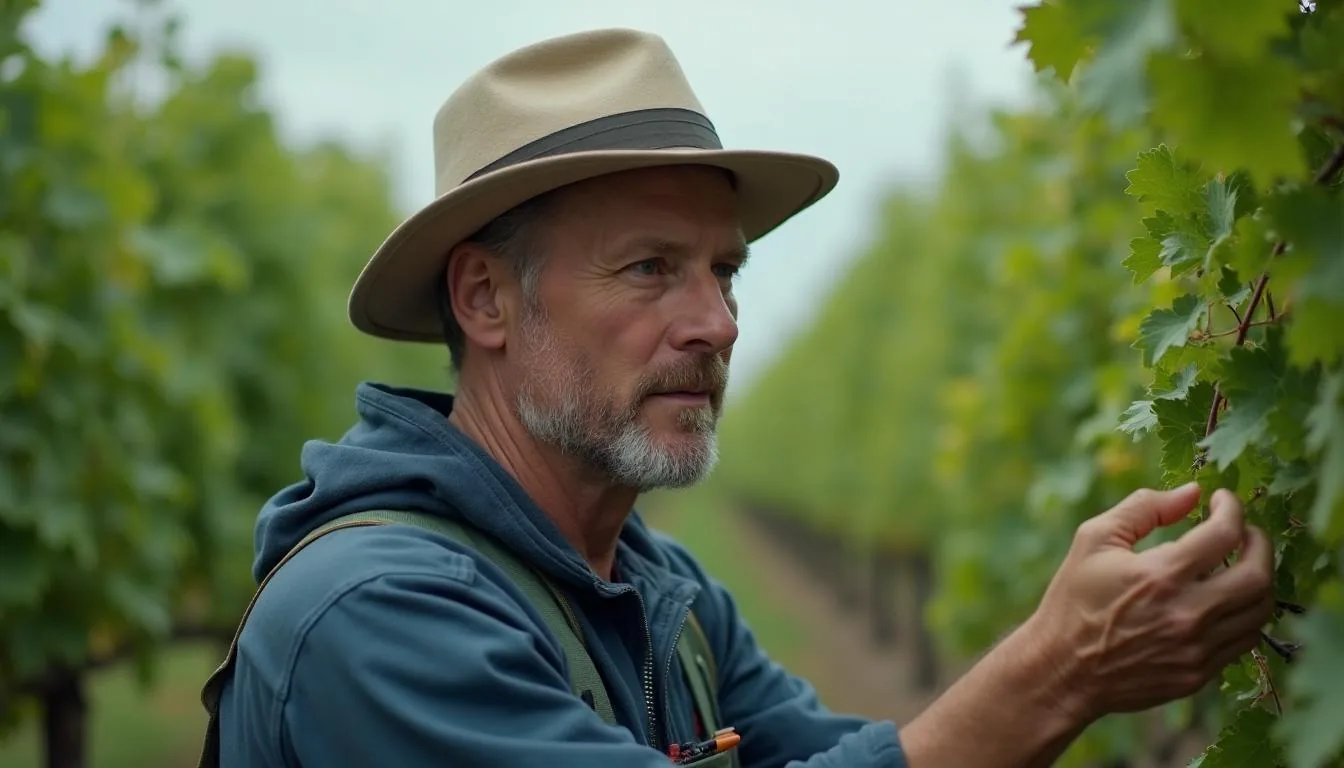
Vineyard management software that keeps the spray record and the block history together
Vineyard management is the season long work of running a planted block: phenology, canopy, irrigation, pest and disease applications, sampling and harvest timing. The unit is the block, not the estate, because 2 blocks of the same variety can be 2 weeks apart. Growing degree days are accumulated from a base of 50 degrees Fahrenheit, and restricted use pesticide records must be kept for 2 years. Neurobird keeps all of it against the block.
Neurobird Vineyard Management in short
- Record every application with product, rate, date, applicator and the restricted entry interval it triggers
- Track phenology and growing degree days per block rather than per estate
- Log petiole, cluster count and maturity samples so harvest calls read against the last 10 vintages, not a hunch
- 170 The EPA Worker Protection Standard at 40 CFR Part 170 sets training, notification, restricted entry and record display duties for agricultural pesticide use, including vineyards. US EPA, Worker Protection Standard
- 2 years Private applicators must keep records of restricted use pesticide applications for 2 years under federal rules, and many states require more detail than the federal minimum. eCFR, 40 CFR Part 170
- Pricing runs 90 to 420 US dollars per month across 3 tiers. Early access is free.
What vineyard managers and growers actually deal with
Why it stays broken
Farm software is written for row crops and wineries are written for the cellar, so the block sits between them. A 240 acre estate with 14 blocks ends up with 14 notebooks, and the one that matters is in the truck that went home.
A 240 acre estate can log over 300 separate applications in a season, and a single missed restricted entry interval puts a crew back into a treated block too early.
Vineyard Wind conducted a GIS-based viewshed analysis to identify locations on the land where there is a relatively high probability that at least part of the proposed Project would be visible.
Neurobird Vineyard Management Audit Platform
Make the block the record. Stage, spray, irrigation, sample and yield attach to it, and the interval clock starts by itself when the application is logged.
- 1Record every application with product, rate, date, applicator and the restricted entry interval it triggers
- 2Track phenology and growing degree days per block rather than per estate
- 3Log petiole, cluster count and maturity samples so harvest calls read against the last 10 vintages, not a hunch
- 4Keep 2 years of pesticide records ready without rebuilding them from a notebook
What changes with Neurobird Vineyard Management?
The same work, read left to right: how it runs today, and how it runs once the record is in one place.
| Today | With Neurobird Vineyard Management |
|---|---|
| Spray records live in a notebook in the truck, and the restricted entry interval is something the crew lead remembers rather than reads | Record every application with product, rate, date, applicator and the restricted entry interval it triggers |
| Growing degree days are tracked in a spreadsheet that nobody updates once the season gets busy | Track phenology and growing degree days per block rather than per estate |
| Harvest decisions run on a sugar number written on a clipboard, with no history of what that block did in the last 5 vintages | Log petiole, cluster count and maturity samples so harvest calls read against the last 10 vintages, not a hunch |
Who is this for?
Same season, three different operations.
You farm your own fruit
You are the manager, the sprayer and the record keeper. On 240 acres across 14 blocks you need the log to take seconds at the end of a pass, on a phone, with no signal.
You farm for owners
Every owner wants a report and every block has its own protocol. You need per property records that print without being rebuilt.
Your fruit is under contract
The winery asks for spray history and maturity samples before it takes delivery. You need that record ready, not reconstructed from a notebook.
The season, as your crew lead would run it
A working preview. Tick an item to record it against the block.
Tap an asset to log a scan and timestamp the inspection.
What vineyard record keeping actually requires
Useful if you are managing blocks or preparing for an inspection. Each source links out.
The EPA Worker Protection Standard at 40 CFR Part 170 sets training, notification, restricted entry and record display duties for agricultural pesticide use, including vineyards.
US EPA, Worker Protection StandardPrivate applicators must keep records of restricted use pesticide applications for 2 years under federal rules, and many states require more detail than the federal minimum.
eCFR, 40 CFR Part 170American Viticultural Areas are established under 27 CFR Part 9, and using an AVA name on a label carries minimum sourcing requirements that trace back to your blocks.
eCFR, 27 CFR Part 9The most recent Census of Agriculture is the 2022 census, the reference dataset for grape acreage, farm counts and production by county.
USDA National Agricultural Statistics ServiceGrowing degree days are accumulated above a base of 50 degrees Fahrenheit. The Winkler index runs from Region I below about 2,500 degree days to Region V above roughly 4,000, and that accumulation drives every timing decision in the block.
UC Statewide Integrated Pest Management Program, grapeHow does Neurobird Vineyard Management work?
Record stage by block
Budbreak, bloom, veraison and harvest are logged per block, with growing degree days accumulating from the 50 degree base rather than being retyped.
Log the application once
Product, rate, acres, applicator and date go in on the phone at the end of the pass. The restricted entry and preharvest intervals are calculated rather than remembered, and the 30 day display duty under 40 CFR Part 170 runs on its own clock.
Keep the sample history
Petiole results, cluster counts and maturity samples build a per block record, so this vintage is read against the last 5 rather than against a hunch.
Vineyard management software questions, answered
Key terms
- What does vineyard management software need to track?
- Blocks, varieties and rootstocks, phenology by block, every pesticide and fertiliser application with its restricted entry and preharvest intervals, irrigation, labour hours, sampling results and yield. The unit that matters is the block, not the estate, because two blocks of the same variety can be 2 weeks apart.
- What are growing degree days?
- Growing degree days are accumulated heat units used to predict vine development, calculated in viticulture from a base temperature of 50 degrees Fahrenheit. The Winkler index groups regions from I, below about 2,500 degree days, to V, above roughly 4,000, and growers use running totals to anticipate bloom, veraison and harvest.
- What is an American Viticultural Area?
- An AVA is a delimited grape growing region recognised by the Alcohol and Tobacco Tax and Trade Bureau under 27 CFR Part 9. Using an AVA name on a label triggers minimum sourcing requirements, which is why block level provenance records matter to the winery buying your fruit.
How long do pesticide records have to be kept?
Federal rules require private applicators to keep records of restricted use pesticide applications for 2 years, and the EPA Worker Protection Standard at 40 CFR Part 170 adds display and retention duties for application information and safety data sheets. Many states require more, so the practical answer is keep everything.
Does this replace our winery production system?
No. It covers the vineyard side up to the point fruit leaves the block: stage, spray, sample, labour and yield. What happens in the cellar stays in your winery system.
Why we are building this
Vineyards are managed by block and recorded by estate, which is why so much of the season lives in notebooks. On 240 acres the spray record, the growing degree day total and the maturity sample all exist. They just do not exist together.
That gets expensive twice: once when a 24 hour restricted entry interval is misjudged, and once when 10 vintages of history cannot be read because none of it was written down the same way.
We would rather build this with people who actually walk the rows. Tell us how your records work now, and where we have got it wrong.
Where the requirement comes from
The federal rules and datasets behind vineyard record keeping.
- EPA Agricultural Worker Protection Standard Training, notification, restricted entry and record duties for agricultural pesticide use.
- 27 CFR Part 9, American Viticultural Areas The established AVAs and their boundaries, which drive label sourcing requirements.
- TTB, wine regulation Federal wine regulation, including bonded premises and labelling obligations that touch grower records.
- USDA 2022 Census of Agriculture Reference data on grape acreage, farm counts and production by county.
How much does Neurobird Vineyard Management cost?
Priced per estate rather than per acre, because the record keeping burden is the same on 40 acres as on 400. Blocks and users are unlimited.
- Block register
- Phenology logging
- Growing degree day tracking
- Spray records
- Email support
- Everything in Single estate
- Restricted entry interval alerts
- Sampling and maturity history
- Labour hours by block
- 24 month record archive
- Named contact
- Everything in Managed vineyards
- Multi property roll up
- Grower to winery fruit reporting
- Compliance record export
- Onboarding included
Get free early access
If you manage vineyard blocks, tell us how spray and phenology records are kept today.
Straight answer on where this is: In development. Early access gets the working preview, a say in what ships first, and early access pricing. It does not get you a login today.
Prefer email? Write to office@neurobird.com and a person will reply. No autoresponder.