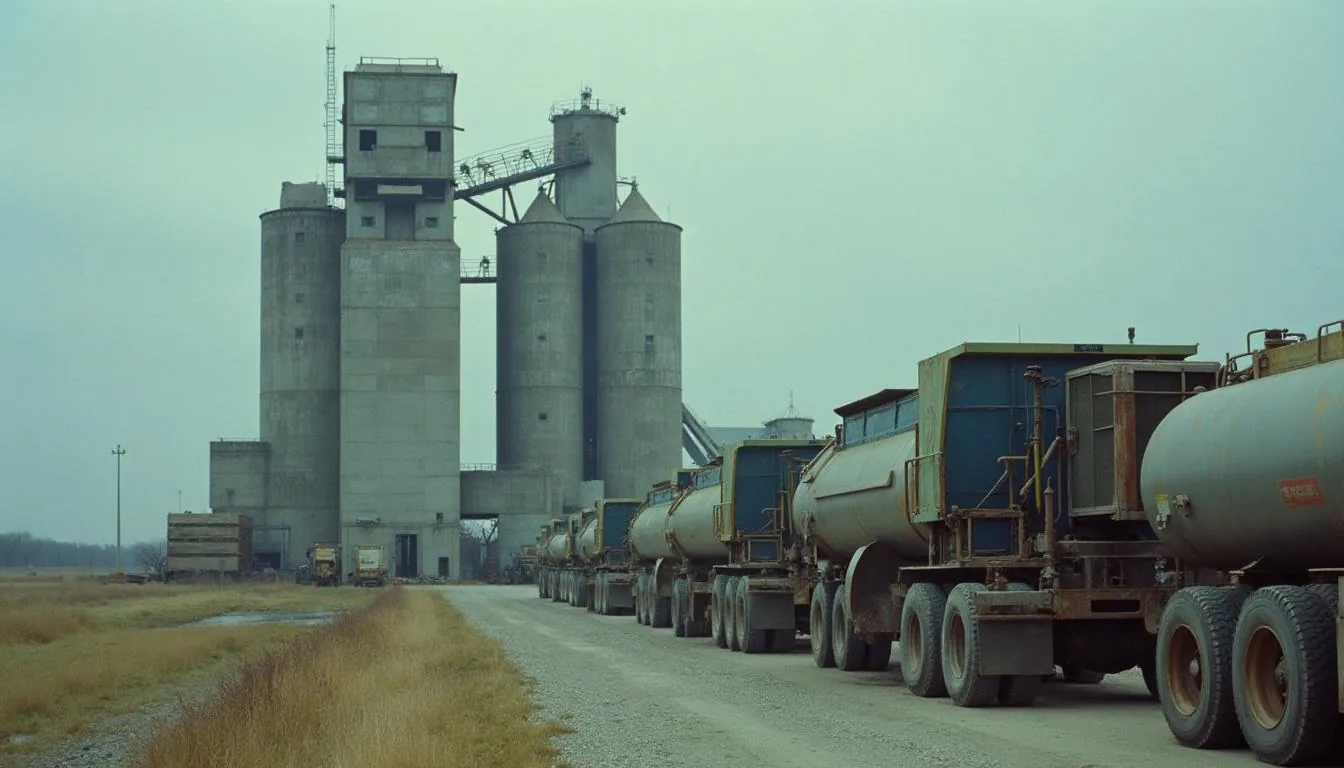
Grain elevator software that grades, discounts and bins a load in one pass
Grain elevator logistics is the movement and accounting of grain from the farm truck across the scale, through grading, drying and binning, and back out by truck, barge or rail. Grades follow the United States Standards for Grain, with corn measured on a 56 pound bushel and wheat on a 60 pound bushel, and dust and bin entry rules come from OSHA 1910.272. Neurobird captures the ticket, applies the discount schedule and keeps a live bin map.
Neurobird Grain Elevator Logistics in short
- Capture the scale ticket with weights, moisture, test weight and damage in one entry
- Apply the discount schedule automatically rather than from a laminated card
- Keep a live bin map so commingling is a decision rather than an accident
- 1910.272 OSHA maintains a standard written specifically for grain handling facilities, covering housekeeping, hot work, bin entry, engulfment and emergency action. OSHA, 29 CFR 1910.272
- 56 and 60 Bushel weights differ by commodity under the federal standards, 56 pounds for corn and 60 pounds for wheat and soybeans, which is why net bushels never come straight off the scale. USDA AMS, grain standards
- Pricing runs 150 to 620 US dollars per month across 3 tiers. Early access is free.
What grain elevator and country elevator operators actually deal with
Why it stays broken
An elevator handles a year of revenue in about 21 days. Nobody rebuilds their systems during harvest, and by December the pain has faded. So the scale house runs on a printed discount card and a whiteboard for another season.
A mistyped moisture on a 1,000 bushel load can move a settlement by more than 100 dollars, and harvest brings hundreds of loads a day.
As a part of the housekeeping program, grain elevators are required to address accumulations of dust at priority areas using the action level.
The scale day, as your operator would run it
A working preview. Tick a load to move it through the scale house.
- Sample gradedpending
- Ticket settledpending
- Bin assignedpending
- Truck weighed inpending
Advance a step to see what the client sees.
Neurobird Grain Elevator Logistics Client Portal
Capture the grade at the moment of the probe, apply the schedule automatically, and let the bin assignment follow from the grade rather than from whoever is on the radio.
- 1Capture the scale ticket with weights, moisture, test weight and damage in one entry
- 2Apply the discount schedule automatically rather than from a laminated card
- 3Keep a live bin map so commingling is a decision rather than an accident
- 4Position bushels against the rail or truck programme before the loading window opens
What changes with Neurobird Grain Elevator Logistics?
The same work, read left to right: how it runs today, and how it runs once the record is in one place.
| Today | With Neurobird Grain Elevator Logistics |
|---|---|
| Harvest arrives in a 3 week window, the scale line backs onto the highway, and every ticket that gets typed wrong is a settlement argument in January | Capture the scale ticket with weights, moisture, test weight and damage in one entry |
| Bin space is tracked on a whiteboard, so a load goes into the wrong bin and two grades get commingled | Apply the discount schedule automatically rather than from a laminated card |
| The shuttle train has a loading window, and nobody knows until the last hour whether the bushels are actually in position | Keep a live bin map so commingling is a decision rather than an accident |
Who is this for?
Same grain, three different bottlenecks.
You take farm trucks
Harvest receiving is the whole year. You need the scale line moving and the grade captured right the first time.
You load unit trains
A 110 car set has a loading window and a rate attached. You need bushel position visible before the crew shows up.
You run several facilities
Grain moves between houses and the inventory has to reconcile. You need one position rather than 4 whiteboards.
How does Neurobird Grain Elevator Logistics work?
Grade at the scale
Weights, moisture, test weight, damage and foreign material captured in one entry, with the discount schedule applied as you type.
Keep the bin map live
Every assignment updates position. Grades that must not commingle are blocked rather than remembered.
Position for the loading window
See what is actually in position for a 110 car set before the crew arrives, not after the first 30 cars.
How grain grading and handling are actually regulated
Useful if you are running a house or writing a discount schedule. Each source links out.
OSHA maintains a standard written specifically for grain handling facilities, covering housekeeping, hot work, bin entry, engulfment and emergency action.
OSHA, 29 CFR 1910.272Bushel weights differ by commodity under the federal standards, 56 pounds for corn and 60 pounds for wheat and soybeans, which is why net bushels never come straight off the scale.
USDA AMS, grain standardsThe Federal Grain Inspection Service administers the official inspection and weighing system for US grain, including the grade factors that drive every discount schedule.
USDA AMS, Federal Grain Inspection ServiceUSDA publishes a Grain Transportation Report tracking rail, barge and truck movement, secondary rail car market bids and basis, which is the public read on shuttle economics.
USDA AMS, Grain Transportation ReportThe OSHA standard carries a formal explanatory appendix on grain dust explosion hazards and the housekeeping practices that reduce them.
OSHA, 1910.272 Appendix AGrain elevator logistics software questions, answered
Key terms
- What is grain elevator logistics?
- Grain elevator logistics is the movement and accounting of grain from the farm truck across the scale, through grading, drying and binning, and back out by truck, barge or rail. The bottleneck is rarely storage capacity. It is receiving throughput during harvest and the ability to position the right grade into the right car at the right hour.
- What is a shuttle train loading window?
- Railroads price unit trains on the ability to load a full set, commonly 110 cars, within a fixed number of hours. Miss the window and you lose the incentive rate. That is why bushel position matters more than bushel total on a loading day.
How is grain graded at the scale?
Against the United States Standards for Grain administered by the Federal Grain Inspection Service. Factors include test weight per bushel, moisture, damaged kernels, foreign material and heat damage. Corn is measured on a 56 pound bushel and soybeans and wheat on a 60 pound bushel, and the discounts flow from those factors.
Why is grain handling dust regulated so heavily?
Because grain dust is explosive and elevators are confined vertical structures. OSHA 1910.272 sets housekeeping, hot work, entry and permit requirements specifically for grain handling facilities, including engulfment and bin entry rules. It is one of the few standards written for a single industry.
Does this replace our accounting or merchandising system?
No. It feeds them. Scale tickets, grades, discounts and bin position are captured here and the settlement and position accounting stay where they are.
Why we are building this
Grain handling is one of the few businesses where 3 weeks decide the year. Everything else is maintenance. During those weeks the scale house is the constraint, and it is usually running on paper.
The grade factors are federal and published. The discount schedule is arithmetic. There is no good reason for either to be typed twice or remembered.
We would rather build this with people who have run a scale house at harvest. Tell us how yours works, and where we have got it wrong.
Where the requirement comes from
The federal standards behind grading, weighing and dust control.
- OSHA, 29 CFR 1910.272 grain handling facilities The industry specific standard covering housekeeping, bin entry, hot work and engulfment hazards.
- USDA AMS, Federal Grain Inspection Service The official inspection and weighing system, and the grade factors used in every settlement.
- USDA AMS, US grain standards The published standards by commodity, including bushel weights and grading factors.
- USDA AMS, Grain Transportation Report Weekly rail, barge and truck movement data and secondary rail car market bids.
How much does Neurobird Grain Elevator Logistics cost?
Priced per facility because the scale house is the unit of work. Unlimited tickets, users and bins on every tier.
- Scale ticket capture
- Grade factor entry
- Discount schedule
- Bin map
- Email support
- Everything in Single house
- Commingling blocks
- Dryer and transfer logging
- Rail and truck position
- Named contact
- Everything in Elevator
- Cross house inventory
- Shuttle loading planner
- Accounting system export
- Onboarding included
Get free early access
If you run an elevator, tell us how the scale house works during harvest and what breaks first.
Straight answer on where this is: In development. Early access gets the working preview, a say in what ships first, and early access pricing. It does not get you a login today.
Prefer email? Write to office@neurobird.com and a person will reply. No autoresponder.