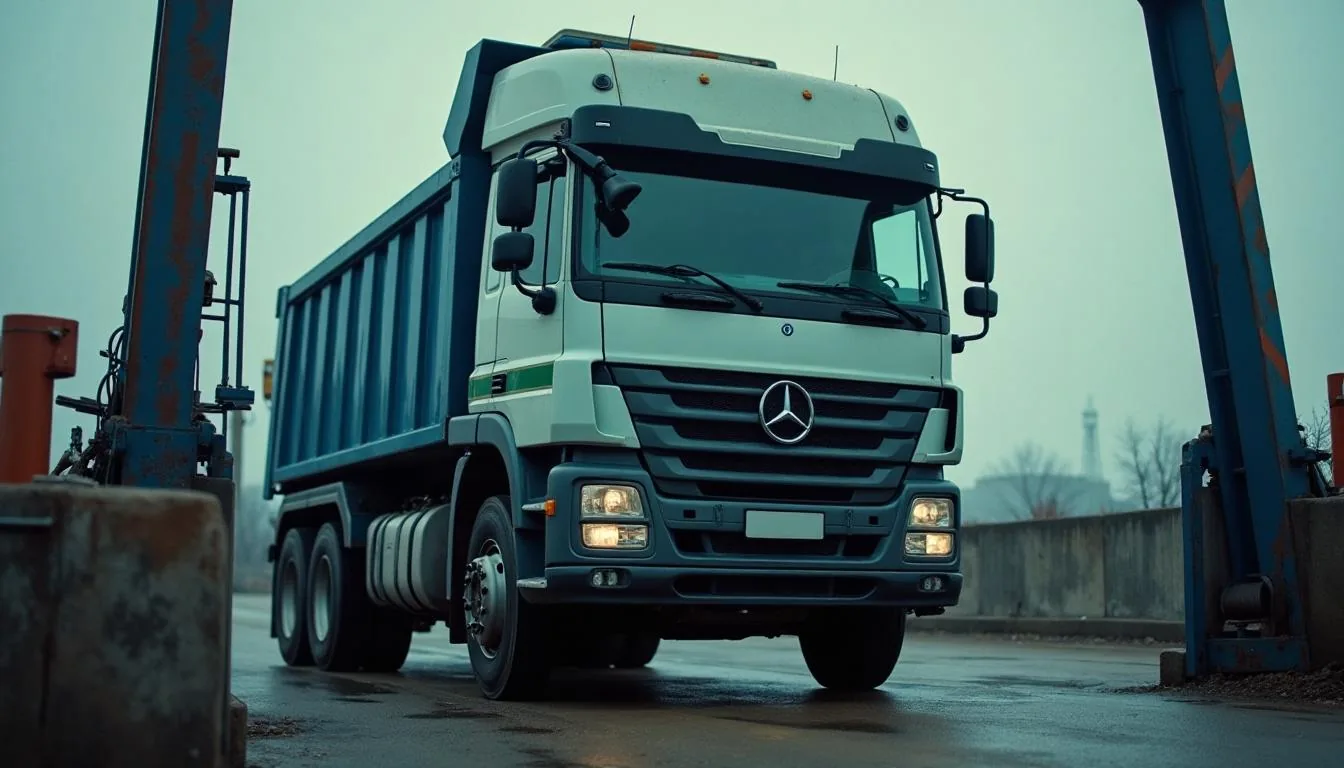
Landfill scale house software that prices the ticket right at the window
A landfill scale house is the control point where every inbound vehicle is weighed, its material classified, its load checked against what the site may accept, and a priced ticket produced. EPA put national municipal solid waste generation at 292.4 million tons in 2018 with 146.1 million tons landfilled, and every ton of it crossed a scale governed by NIST Handbook 44 and a load checking program under 40 CFR Part 258. Neurobird holds the ticket, the account and the tonnage.
Neurobird Landfill Scale House in short
- Weigh in and out with current tare weights rather than remembered ones
- Check special waste profiles and manifests before the truck reaches the working face
- Price the ticket at the window against the right account, rate and material
- 292.4 Million tons of municipal solid waste generated nationally in 2018 according to EPA, with 146.1 million tons of it landfilled. EPA facts and figures on materials and waste
- Part 258 The Subtitle D criteria for municipal solid waste landfills, covering location, operating criteria, load checking and recordkeeping. eCFR, 40 CFR Part 258
- Pricing runs 190 to 720 US dollars per month across 3 tiers. Early access is free.
What landfill and transfer station operators actually deal with
Why it stays broken
Scale house systems were sold with the weighbridge 20 years ago and were never meant to be changed. So special waste, account rates and permit tonnage all end up on paper beside a terminal from another decade.
A tare weight 400 pounds out of date, repeated across 120 loads, is real money billed wrong.
A municipal solid waste landfill (MSWLF) is a discrete area of land or excavation that receives household waste.
How landfill weighing and load acceptance are governed
Useful if you operate a site or are replacing a scale system. Each source links out.
Million tons of municipal solid waste generated nationally in 2018 according to EPA, with 146.1 million tons of it landfilled.
EPA facts and figures on materials and wasteThe Subtitle D criteria for municipal solid waste landfills, covering location, operating criteria, load checking and recordkeeping.
eCFR, 40 CFR Part 258The operating criterion requiring a program to detect and prevent disposal of regulated hazardous waste, including random inspections and records.
eCFR, 40 CFR 258.20Vehicle scales used in commercial transactions are held to the tolerances and test procedures in NIST Handbook 44, adopted by state weights and measures programs.
NIST Handbook 44Operating criteria including daily cover, disease vector control and air criteria, the requirements a site reports against alongside its tonnage.
eCFR, 40 CFR Part 258 Subpart CNeurobird Landfill Scale House Client Portal
Treat the ticket as the record, not the printout. Account, rate, material, profile and tonnage all resolved before the truck pulls off the pad.
- 1Weigh in and out with current tare weights rather than remembered ones
- 2Check special waste profiles and manifests before the truck reaches the working face
- 3Price the ticket at the window against the right account, rate and material
- 4Track daily and monthly tonnage against permit limits without a month end scramble
What changes with Neurobird Landfill Scale House?
The same work, read left to right: how it runs today, and how it runs once the record is in one place.
| Today | With Neurobird Landfill Scale House |
|---|---|
| The scale house runs on a legacy terminal nobody can modify and a stack of paper tickets for anything unusual | Weigh in and out with current tare weights rather than remembered ones |
| Tare weights drift, accounts get billed on stale numbers, and the reconciliation happens at month end if it happens | Check special waste profiles and manifests before the truck reaches the working face |
| Load checking and special waste approvals depend on the operator recognising the truck, which does not survive a shift change | Price the ticket at the window against the right account, rate and material |
Who is this for?
Same scale, three different sites.
You answer to a council and a permit
Tonnage reporting is public and the permit limit is real. You need the number continuously, not on the last day of the month.
Tipping fees are the revenue
Account rates, contract minimums and tare accuracy decide your margin. You need pricing resolved at the window.
Material comes in and goes back out
You weigh twice and reconcile constantly. You need inbound and outbound tied together on one record.
How does Neurobird Landfill Scale House work?
Weigh against current data
Vehicle, hauler and tare weight are looked up live, so a stale tare does not price 120 loads incorrectly.
Check the load at the window
Special waste profiles, manifests and prohibited material rules are applied before the truck reaches the working face, and random inspections are logged.
Watch the tonnage line
Daily and monthly net tons run against permit limits continuously, so the number is known before the report is due, not after.
The ticket, as your scale operator would run it
A working preview. Tick a step to move the load across the scale.
- Inbound weighedpending
- Material classifiedpending
- Outbound weighedpending
- Ticket pricedpending
Advance a step to see what the client sees.
Landfill scale house software questions, answered
Key terms
- What does a landfill scale house do?
- A landfill scale house is the control point where every inbound vehicle is weighed, its material classified, its load checked against what the site is permitted to accept, and a priced ticket produced. The outbound weight gives the net tonnage that becomes the invoice line and the reported disposal quantity.
- What is load checking?
- A required inspection program at municipal solid waste landfills to keep out regulated hazardous waste and other prohibited material. Under the Subtitle D criteria at 40 CFR Part 258 an operator has to run a documented program of random inspections and staff training, and the scale house is where it starts.
Why are scale accuracy rules so strict?
Because the ticket is a commercial weighing transaction. Vehicle scales used for trade are held to the tolerance and testing requirements in NIST Handbook 44, adopted by state weights and measures programs, and are tested and sealed on a schedule.
How much material actually goes to landfill?
EPA's most recent published national figures put municipal solid waste generation at 292.4 million tons in 2018, of which 146.1 million tons went to landfill. That is the tonnage passing over scale houses like yours.
Does this replace our scale indicator or accounting system?
No. The indicator keeps weighing and your accounting system keeps invoicing. This is the ticket, the account, the material classification and the tonnage record in between.
Why we are building this
The scale house is the only place a landfill sees every load, every hauler and every ton. It is also usually the least modern system on the site.
That matters because the ticket produced there is simultaneously an invoice line, a load acceptance decision and a regulatory record. Three jobs, one window, one terminal that cannot be changed.
We would rather build this with operators. Tell us what your scale house actually needs, and where we have got it wrong.
Where the requirement comes from
The waste rules and the weighing standards behind the ticket.
- 40 CFR Part 258, MSW landfill criteria The federal criteria for municipal solid waste landfills, including operating requirements and records.
- 40 CFR 258.20, hazardous waste detection The load checking obligation: random inspections, staff training and recordkeeping.
- NIST Handbook 44 Specifications and tolerances for commercial weighing devices, including vehicle scales.
- EPA facts and figures on materials and waste National generation, recycling and landfill tonnage, the public baseline for disposal volumes.
How much does Neurobird Landfill Scale House cost?
Priced per scale lane because that is where the work happens. Unlimited accounts, haulers and tickets.
- Inbound and outbound weighing
- Vehicle and tare register
- Ticket pricing
- Account billing export
- Email support
- Everything in Single lane
- Special waste profiles
- Load inspection log
- Permit tonnage tracking
- Named contact
- Everything in Site
- Cross site reporting
- Scale indicator integration
- State reporting exports
- Onboarding included
Get free early access
If you run a scale house, tell us what your current system cannot do and where the paper starts.
Straight answer on where this is: In development. Early access gets the working preview, a say in what ships first, and early access pricing. It does not get you a login today.
Prefer email? Write to office@neurobird.com and a person will reply. No autoresponder.