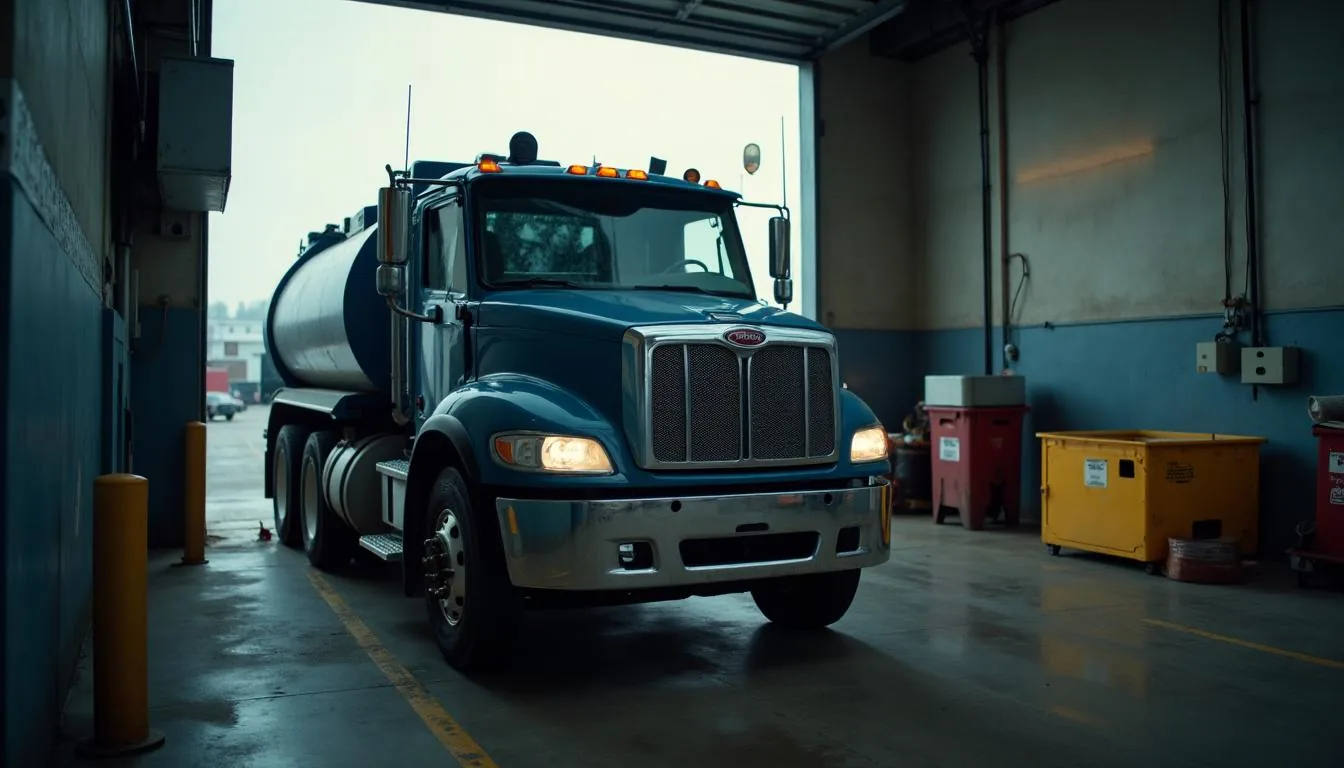
Grease trap pumping software that builds the route from what is actually due
Grease trap pumping is the scheduled removal of fats, oils, grease and settled solids from interceptors at food service establishments before that material reaches the sewer. Frequency is set by local ordinance, commonly triggered at 25 percent of working depth, and sits under the national pretreatment programme in 40 CFR Part 403. The Environmental Protection Agency estimates 23,000 to 75,000 sanitary sewer overflows happen each year. Neurobird builds the route from due dates and captures the manifest at the stop.
Neurobird Grease Trap Pumping in short
- Hold every account with trap size, ordinance frequency and last pumped date
- Build routes from what is due rather than from memory
- Capture the manifest, volume pumped and signature at the stop, on a phone
- 23,000 to 75,000 Estimated sanitary sewer overflows in the United States each year, with blockages among the named causes, which is why local grease programmes exist at all. EPA, Sanitary Sewer Overflows
- 40 CFR 403 The general pretreatment regulations, the federal framework that local fats, oils and grease ordinances and hauler permits are written under. eCFR, 40 CFR Part 403
- Pricing runs 79 to 349 US dollars per month across 3 tiers. Early access is free.
What grease trap pumping and liquid waste haulers actually deal with
Why it stays broken
Frequencies come from an ordinance, sizes come from a plumbing plan, and the schedule comes from the dispatcher's memory. So a route with 18 stops is rebuilt by hand every week, and the proof of service ends up in a truck door pocket.
A missed 90 day pump out is a citation for the restaurant and a lost account for you.
Full-cleaning of grease traps (removing all liquids and solids and scraping the walls) is a worthwhile investment.
Neurobird Grease Trap Pumping Dispatch Platform
Hold the account, the trap and the ordinance frequency as data. The route stops being a memory exercise and becomes a query.
- 1Hold every account with trap size, ordinance frequency and last pumped date
- 2Build routes from what is due rather than from memory
- 3Capture the manifest, volume pumped and signature at the stop, on a phone
- 4Produce the service record a municipality or a health inspector asks for without a truck search
What changes with Neurobird Grease Trap Pumping?
The same work, read left to right: how it runs today, and how it runs once the record is in one place.
| Today | With Neurobird Grease Trap Pumping |
|---|---|
| The route is a whiteboard and the schedule is in the dispatcher's head, so a sick driver costs a whole day | Hold every account with trap size, ordinance frequency and last pumped date |
| Proof of service is a paper manifest that gets left in a truck, and the city wants it when the restaurant gets cited | Build routes from what is due rather than from memory |
| Frequencies are set by ordinance and trap size, and nobody recalculates them when a kitchen's volume changes | Capture the manifest, volume pumped and signature at the stop, on a phone |
Who is this for?
Same route, three different businesses.
You drive and you dispatch
You are the schedule. You need the due dates out of your head and onto a board so somebody else can drive the route.
You run several trucks
Routing across cities with different ordinances is the hard part. You need frequency rules per jurisdiction, not one blanket schedule.
You service under contract
You report to a city as well as to customers. You need service evidence you can export without going through a stack of paper.
The route, as your dispatcher would build it
A working preview. Tick a stop to move it through the day.
Drag a job onto a driver to assign it.
How does Neurobird Grease Trap Pumping work?
Register the account and the trap
Trap size, type, location on site, ordinance frequency and last pumped date are captured once, so the next due date is computed rather than remembered.
Build the route from due dates
The board fills itself from what is due this week, in geographic order, and a driver going out sick becomes a reassignment rather than a lost day.
Capture proof at the stop
Volume pumped, manifest, photos and signature are taken on the phone at the kitchen door, and the record is filed against the account before the truck leaves.
What actually drives pumping frequency
Useful if you are bidding municipal work or explaining a schedule to a customer. Each source links out.
Estimated sanitary sewer overflows in the United States each year, with blockages among the named causes, which is why local grease programmes exist at all.
EPA, Sanitary Sewer OverflowsThe general pretreatment regulations, the federal framework that local fats, oils and grease ordinances and hauler permits are written under.
eCFR, 40 CFR Part 403The national pretreatment programme sets how publicly owned treatment works control what commercial dischargers send them, including food service establishments.
EPA, National Pretreatment ProgramPretreatment standards and requirements are applied through local limits, which is why frequency and reporting rules change from one city to the next.
EPA, Pretreatment Standards and RequirementsFederal water enforcement actions are published, and a discharge violation traced back to an unserviced interceptor lands on both the establishment and its hauler.
EPA, Water EnforcementGrease trap pumping software questions, answered
Key terms
- What is grease trap pumping?
- Grease trap pumping is the scheduled removal of fats, oils, grease and settled solids from interceptors at food service establishments, so the material does not reach the sewer. Frequency is usually set by a local ordinance, commonly triggered when accumulated grease and solids reach 25 percent of the interceptor's working depth.
- What is the pretreatment programme?
- The national pretreatment programme, set out in 40 CFR Part 403, requires industrial and commercial dischargers to control what they put into a public sewer. Local grease ordinances and hauler permits are how that reaches a restaurant kitchen.
Why do municipalities regulate this?
Because grease is a leading cause of sewer blockages. The Environmental Protection Agency estimates at least 23,000 to 75,000 sanitary sewer overflows occur nationwide each year, and grease is one of the named causes. Local fats, oils and grease programmes sit under the national pretreatment programme.
Does this replace our accounting software?
No. It handles routing, service records and disposal tickets. Billing data goes out to whatever you invoice with, with the volume and the signature attached to the job.
Why we are building this
Grease pumping is a scheduling business wearing a plumbing uniform. The service itself is straightforward. Knowing which of 400 accounts is due this week, and proving you serviced them, is the actual job.
Most operators do that with a whiteboard and paper manifests, then lose an afternoon when a city asks for a year of records on one restaurant.
We would rather build this with haulers than guess. Tell us how your week is planned, and where we have got it wrong.
Where the requirement comes from
The federal framework local grease ordinances are written under.
- EPA, National Pretreatment Program How publicly owned treatment works control commercial discharges, the parent of every local FOG ordinance.
- 40 CFR Part 403, general pretreatment regulations The regulation itself: standards, local limits and reporting duties for non domestic dischargers.
- EPA, Sanitary Sewer Overflows Causes and scale of sewer overflows, including the estimate of 23,000 to 75,000 events per year.
- EPA, Pretreatment Standards and Requirements How local limits are derived, which is why frequency rules differ between cities.
How much does Neurobird Grease Trap Pumping cost?
Priced per truck because the constraint is trucks, not office seats. Unlimited accounts and users on every tier.
- Account and trap registry
- Due date scheduling
- Driver mobile app
- Manifest capture
- Email support
- Everything in Single truck
- Drag and drop route board
- Photo proof of service
- Disposal ticket tracking
- Named contact
- Everything in Fleet
- Ordinance frequency rules by city
- Compliance reporting export
- Customer service portal
- Onboarding included
Get free early access
If you pump traps, tell us how the route gets built today and what happens to the paper manifest.
Straight answer on where this is: In development. Early access gets the working preview, a say in what ships first, and early access pricing. It does not get you a login today.
Prefer email? Write to office@neurobird.com and a person will reply. No autoresponder.