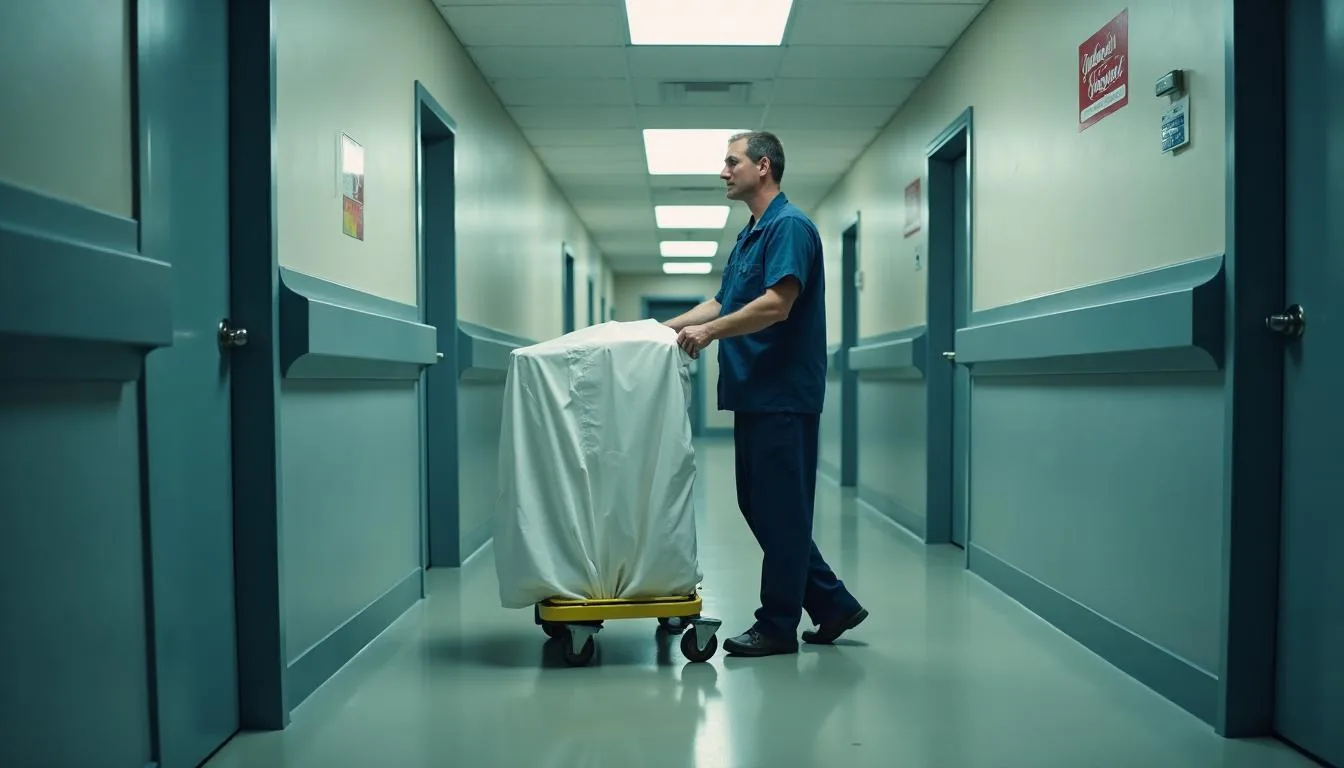
Hospital linen tracking software that knows where every cart, gown and pack actually went
Hospital linen tracking is the count a facility keeps of reusable textiles as they move from the clean linen room to the patient floors, into the soiled hold and out to the laundry that processes them. The handling rules are federal and specific: 29 CFR 1910.1030 requires contaminated laundry to be bagged where it was used and never sorted or rinsed there, and 42 CFR 482.42 puts the whole practice inside the hospital infection prevention program. Neurobird holds the carts, the par levels and the laundry statement on one record.
Neurobird Hospital Linen Tracking in short
- Count carts out and back at the exchange instead of trusting the weight on a laundry statement
- Hold a par level per unit and show which floors are drifting above it and which are running dry
- Keep the soiled classes apart on the record the way 250.1750 keeps them apart in the chute
- 60 days Minimum PPE supply a New York hospital must hold, with the gown quantity set at fifteen percent of staffed beds multiplied by 41 and single gloves at fifteen percent of staffed beds multiplied by 550. 10 NYCRR 405.11
- 10 days On site supply a New York hospital must still hold if it stores the rest of the stockpile off site, where the off site location has to be reachable within 24 hours and inside the state. 10 NYCRR 405.11
- Pricing runs 219 to 1450 US dollars per month across 3 tiers. Early access is free.
What hospitals and healthcare laundries actually deal with
Why it stays broken
Linen belongs to everyone and to nobody. Environmental services moves it, nursing consumes it, infection prevention writes the policy, and an outside laundry owns the plant, so the count sits in four places and reconciles in none. The regulations are precise about how soiled linen is bagged and where clean linen is stored, and completely silent on who counts the carts, which is exactly the part that stayed on paper.
New York requires a hospital to hold at least a 60 day supply of PPE, with the gown figure set at fifteen percent of staffed beds multiplied by 41.
The hospital must have active hospital-wide programs for the surveillance, prevention, and control of HAIs and other infectious diseases, and for the optimization of antibiotic use through stewardship.
What the rules say about hospital linen
The federal infection control condition of participation, the OSHA standard that governs soiled laundry at the point of use, and two states that write the linen rules out in full.
Minimum PPE supply a New York hospital must hold, with the gown quantity set at fifteen percent of staffed beds multiplied by 41 and single gloves at fifteen percent of staffed beds multiplied by 550.
10 NYCRR 405.11On site supply a New York hospital must still hold if it stores the rest of the stockpile off site, where the off site location has to be reachable within 24 hours and inside the state.
10 NYCRR 405.11Contaminated laundry must be bagged or containerized at the location where it was used, must not be sorted or rinsed there, and needs a container that prevents soak through whenever it is wet.
OSHA 29 CFR 1910.1030Four classes of laundry Illinois requires to be transported, stored and washed separately: soiled diapers, newborn nursery linen, radioactive contaminated linen and linen from pathology.
Ill. Admin. Code tit. 77, 250.1750Clean linen arriving from a commercial laundry must be completely wrapped in bundles or otherwise protected and delivered to a designated clean area, and corridors may not be used to store it.
Ill. Admin. Code tit. 77, 250.1760The condition of participation that puts linen handling inside a hospital wide infection prevention program which must follow nationally recognized guidelines and report into the quality program.
CMS 42 CFR 482.42Neurobird Hospital Linen Tracking Inspection Tracking Platform
One record per cart: what left the clean linen room, which unit signed for it, what came back soiled, what the laundry billed for it, and the par level that was supposed to hold that floor through the night.
- 1Count carts out and back at the exchange instead of trusting the weight on a laundry statement
- 2Hold a par level per unit and show which floors are drifting above it and which are running dry
- 3Keep the soiled classes apart on the record the way 250.1750 keeps them apart in the chute
- 4Reconcile the laundry statement against your own count before anyone approves it for payment
What changes with Neurobird Hospital Linen Tracking?
The same work, read left to right: how it runs today, and how it runs once the record is in one place.
| Today | With Neurobird Hospital Linen Tracking |
|---|---|
| Carts leave the dock full and come back light, and nobody can say which floor kept them | Count carts out and back at the exchange instead of trusting the weight on a laundry statement |
| Par levels are set from memory, so one unit hoards scrubs while another runs out at three in the morning | Hold a par level per unit and show which floors are drifting above it and which are running dry |
| The laundry statement is weighed in pounds and the hospital has no count of its own to argue with | Keep the soiled classes apart on the record the way 250.1750 keeps them apart in the chute |
Who is this for?
The same cart, three very different operations.
You send the wash out
One plant, one truck, one statement a month. You need a count of your own so the pounds you are billed for match the carts you actually sent.
You run your own plant
Several campuses drawing on one laundry. You need par levels per unit and a view of where the fleet of carts is sitting today.
You live on packs and gowns
Reusable gowns and instrument wrap with a case schedule behind them. You need the count tied to tomorrow's board, not to last month's average.
The cart board, as your linen room would work it
Close an exchange and watch the par level, the floor balance and the weekly count move together.
Tap an asset to log a scan and timestamp the inspection.
How does Neurobird Hospital Linen Tracking work?
Set the par
Every unit gets a par level per item, tied to staffed beds rather than to the number a supervisor happens to remember, and the formula behind it stays visible.
Scan the exchange
Carts are counted out of the clean linen room and back from the soiled hold, so a floor that quietly keeps a cart shows up as a floor rather than as shrinkage.
Reconcile the statement
The laundry statement lands beside your own count for the same week, and the gap becomes a line someone can question instead of a rounding error nobody owns.
Hospital linen tracking software questions, answered
Key terms
- What is hospital linen tracking?
- It is the count of reusable textiles as they move from the clean linen room to the units, into the soiled hold and out to the laundry. It covers cart exchange, unit par levels, soiled returns and the reconciliation of what the laundry billed against what the hospital actually sent.
- What are the rules for handling soiled linen?
- 29 CFR 1910.1030 requires contaminated laundry to be bagged or containerized where it was used, and it may not be sorted or rinsed in the location of use. Illinois goes further at 250.1750 and requires soiled diapers, newborn nursery linen, radioactive contaminated linen and pathology linen to be transported, stored and washed separately.
Does this replace our laundry provider's system?
No. The plant keeps its own production record. This is the hospital side of the same freight, so when the statement arrives you have a count of your own for the same week rather than a weight you can only accept.
How are par levels set?
Per unit, per item, tied to staffed beds rather than to a number carried in someone's head. New York already does this arithmetic for PPE at fifteen percent of staffed beds multiplied by 41 for gowns, and the same shape works for a linen par.
Can it show where a missing cart went?
It shows the last exchange that cart appears in and the unit that signed for it. Loss stops being a monthly surprise on the statement and becomes a floor with a date attached to it.
Why we are building this
We went looking for expensive things that nobody counts, and hospital linen kept coming up. A cart of clean linen is worth real money, it is regulated at both ends of its trip, and in most buildings the only number attached to it is a weight on a statement from an outside plant. That is a record problem, and record problems are what we build. The rules we read while scoping this are linked above, so you can check our reading of them instead of taking our word for it. If we have the flow wrong, tell us and we will fix it.
Where the requirement comes from
Primary sources, straight from the regulators.
- 42 CFR 482.42, infection prevention and control condition of participation The program a hospital must run, who is appointed to lead it and how linen handling lands inside it.
- 29 CFR 1910.1030, bloodborne pathogens, laundry provisions Bagging at the point of use, labeling and color coding, and what changes when the wash goes off site.
- 10 NYCRR 405.11, hospital infection control and PPE stockpile The 60 day stockpile, the per bed multipliers behind it and the 14 day grace period on a first violation.
- Ill. Admin. Code tit. 77, 250.1750, soiled linen Separate classes, bagging at the site of use, cart labeling and negative pressure in a laundry chute.
- Ill. Admin. Code tit. 77, 250.1760, clean linen How clean linen arrives, where it may be stored and why clean and soiled staff cannot be the same staff.
- OSHA hospitals eTool, laundry The hazards OSHA expects a hospital laundry operation to have already thought about, written plainly.
How much does Neurobird Hospital Linen Tracking cost?
Priced per operation because the par levels, the cart fleet and the statement belong to the facility rather than to any one unit. Carts, exchanges and items are unlimited on every tier.
- One hospital
- Unlimited carts
- Unit par levels
- Weekly reconciliation
- Multiple campuses
- Shared cart fleet view
- Laundry statement matching
- Loss reporting by unit
- Plant and facility views
- Route manifests
- Chargeback exports
- Priority support
Get free early access
Early access means we load your item list, your units and your current par levels before you type anything, and the account stays free while we do it.
Straight answer on where this is: The software is in development. Nothing is purchasable today. Early access means you shape it and pay nothing while we build.
Prefer email? Write to office@neurobird.com and a person will reply. No autoresponder.